
Selecting a cancer hospital in Delhi NCR demands careful evaluation of cost transparency, multidisciplinary expertise, technology infrastructure, and insurance acceptance—factors that vary dramatically across government, private, and charitable institutions.
Key Takeaways
- Government hospitals like AIIMS and Safdarjung offer ₹50,000–₹1.5 lakh treatment costs but 2–6 month wait times for non-urgent cases
- Private hospitals charge ₹3–6 lakh but schedule consultations within 2–4 weeks and provide cashless insurance processing
- On-site multidisciplinary teams (surgical, medical, radiation oncologists) enable coordinated tumor boards under one roof
- Linear accelerator radiation therapy reduces treatment cycles and tissue damage compared to older cobalt-based units
- CGHS empanelment status varies annually, verify eligibility before admission to secure cashless benefits
What Defines Thorough Cancer Care in Delhi NCR
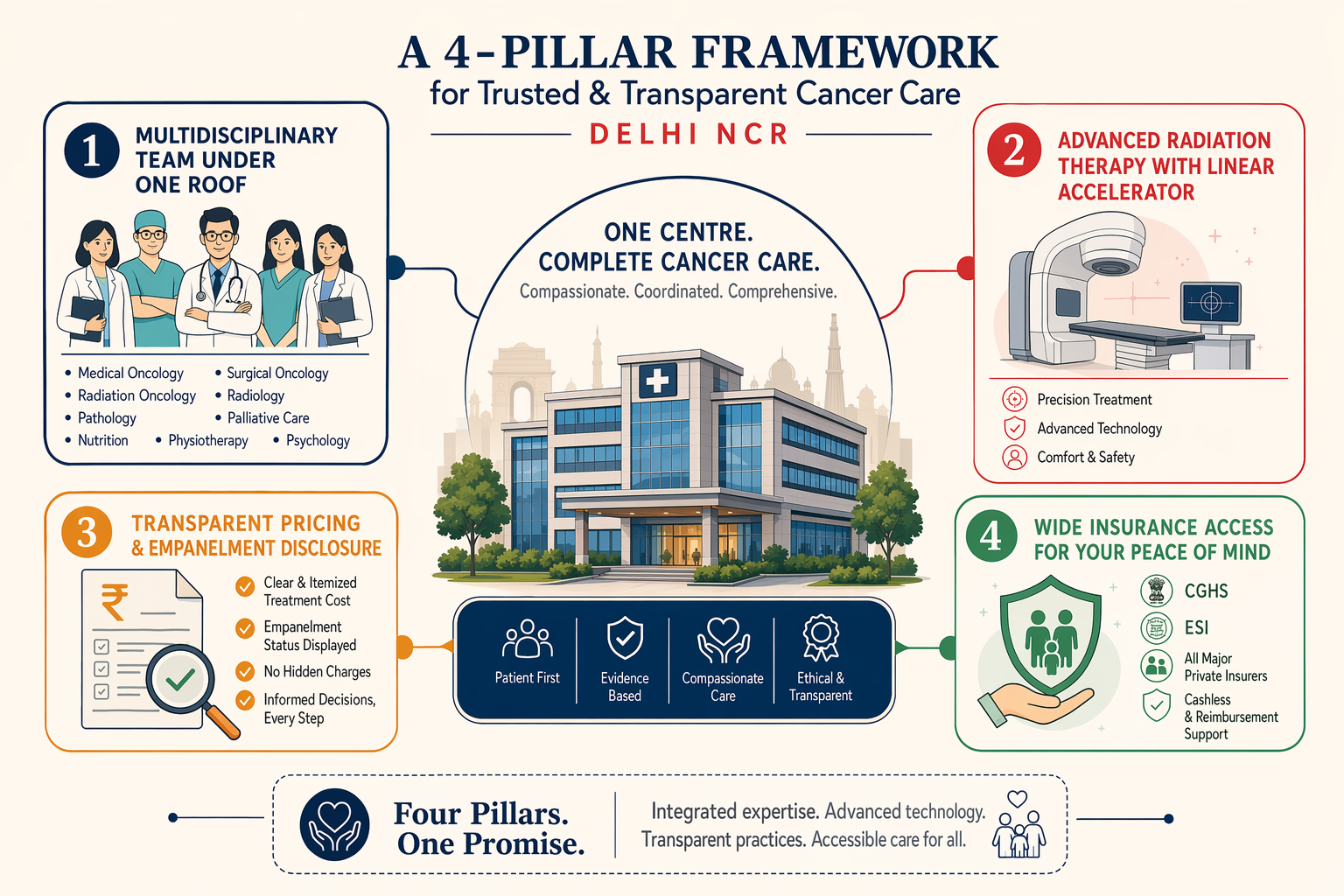
Thorough cancer care in Delhi NCR requires on-site multidisciplinary teams (surgical, medical, and radiation oncologists collaborating under one roof), advanced radiation infrastructure (linear accelerators rather than cobalt units), transparent cost disclosure aligned with government empanelment rates, and acceptance of CGHS, ESI, and major private insurers. These four pillars determine whether a hospital delivers coordinated treatment or forces patients to navigate fragmented referral chains.
Multidisciplinary Oncology Team Composition
On-site multidisciplinary teams enable real-time consultation across specialties, a single tumor board can reconcile surgical resection margins with radiation dosimetry and systemic therapy sequencing in one session. Referral-based models scatter these discussions across separate institutions, introducing coordination delays that can postpone treatment by weeks. Andromeda Cancer Hospital's breast oncology center exemplifies the co-located structure: oncoplastic breast surgeons, medical oncologists, radiation oncologists, radiologists, pathologists, pain and palliative care specialists, clinical psychologists, and breast care nurses work from the same facility. For thoracic and other solid tumors, the hospital similarly integrates surgical, medical, and radiation oncology teams on-site, eliminating the patient burden of coordinating appointments across multiple campuses.
Technology Infrastructure: Linear Accelerators Vs. Cobalt Units
Linear accelerator (LINAC) radiation therapy delivers precise, conformal dose distributions with image guidance (IGRT, IMRT, VMAT), reducing treatment cycles and collateral tissue damage compared to older cobalt-60 units. While cobalt machines remain common in budget-tier centers due to lower capital costs, they lack the beam shaping and gating capabilities key for stereotactic radiosurgery and respiratory motion management. Andromeda Cancer Hospital operates a Varian TrueBeam STx linear accelerator capable of IGRT, IMRT, VMAT, 3D-CRT, SRS/SRT, SBRT, respiratory gating, and total body/marrow/skin irradiation, positioning the facility within the technology tier that can treat head-and-neck, lung, and pediatric cases requiring sub-millimeter accuracy. The PMC value-based-care study documents this infrastructure gap: many Indian cancer centers still rely on cobalt or entry-level LINACs without image guidance, constraining treatment options for patients with complex tumors.
Cost Transparency and Insurance Empanelment
Government empanelment under CGHS and ESI establishes published rate ceilings, surgery categories I, V carry defined per-day charges, chemotherapy follows CGHS super-specialty rates, and hospitals must offer 10% discounts on chemotherapy medicines when supplied on credit. Private empanelment with insurers like Star Health, ICICI Lombard, and Care Health follows similar rate-card discipline, reducing out-of-pocket surprises for cashless admissions. Hospitals that publish cost-range benchmarks (e.g., surgery categories, per-fraction radiation pricing) enable pre-treatment financial planning; those requiring sales conversations for every quote introduce friction that delays care decisions. Andromeda Cancer Hospital participates in CGHS empanelment frameworks and accepts major private insurers, aligning its billing transparency with the government model that caps surgical stays at 1 to 14 days depending on procedure complexity.
Understanding what thorough cancer care entails sets the foundation for evaluating affordability trade-offs across hospitals.
How to Evaluate Affordability Vs. Service Scope Trade-Offs
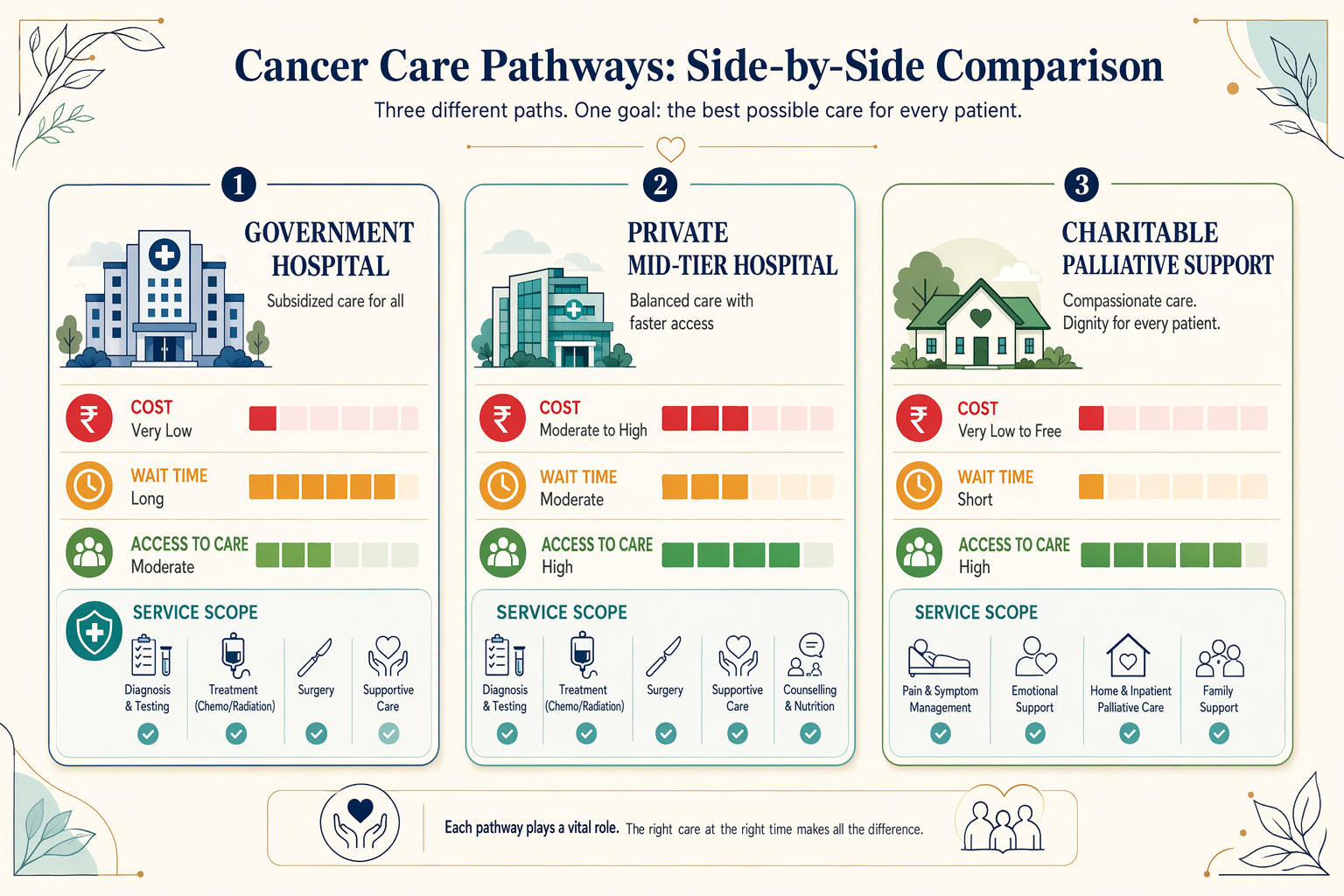
Choosing a cancer hospital often forces patients into trade-offs between immediate access and out-of-pocket cost. Government hospitals like AIIMS and Safdarjung offer near-zero treatment costs (₹50,000, ₹1.5 lakh for common cancers), but non-emergency cases face 2 to 6 month wait times. Private mid-tier hospitals, Max, Fortis, Manipal, and Andromeda, charge ₹3 to 6 lakh for similar treatments yet schedule initial consultations within 2 to 4 weeks. Charitable pathways, such as CanSupport's free home-based palliative care, fill gaps for supportive care regardless of where primary treatment occurs.
Government Hospitals: Low Cost, Longer Wait Times
AIIMS, Safdarjung, and Rajiv Gandhi Cancer Institute deliver thorough oncology at ₹50,000, ₹1.5 lakh total treatment cost, but outpatient appointment backlogs stretch 2 to 6 months for non-urgent cases. Patients who can tolerate the delay and need near-zero out-of-pocket expense benefit; those whose disease progression requires faster intervention must pivot to private facilities.
Private Mid-Tier Hospitals: Immediate Access at Mid-Range Pricing
Max, Fortis, Manipal, and Andromeda schedule consultations within 2 to 4 weeks and charge ₹3 to 6 lakh for chemotherapy, radiation, and surgical packages. Insurance empanelment (CGHS, ESI, private) reduces out-of-pocket to 30 to 50% of billed cost, but patients must verify coverage before admission, many assume 'best hospital' means 'my insurance covers it,' yet empanelment varies widely.
Charitable and NGO Pathways for Free or Subsidized Care
CanSupport provides free home-based palliative care, including nursing, wound management, and pain control, to patients who cannot travel. Dharamshila Narayana offers subsidized surgical packages for below-poverty-line families; these programs require income verification but impose no wait-list penalties.
With evaluation criteria established, a side-by-side comparison of ten leading institutions clarifies how each hospital positions itself across cost, technology, and service scope.
Top 10 Cancer Hospitals in Delhi NCR: Comparative Overview
Comparison Methodology and Data Sources
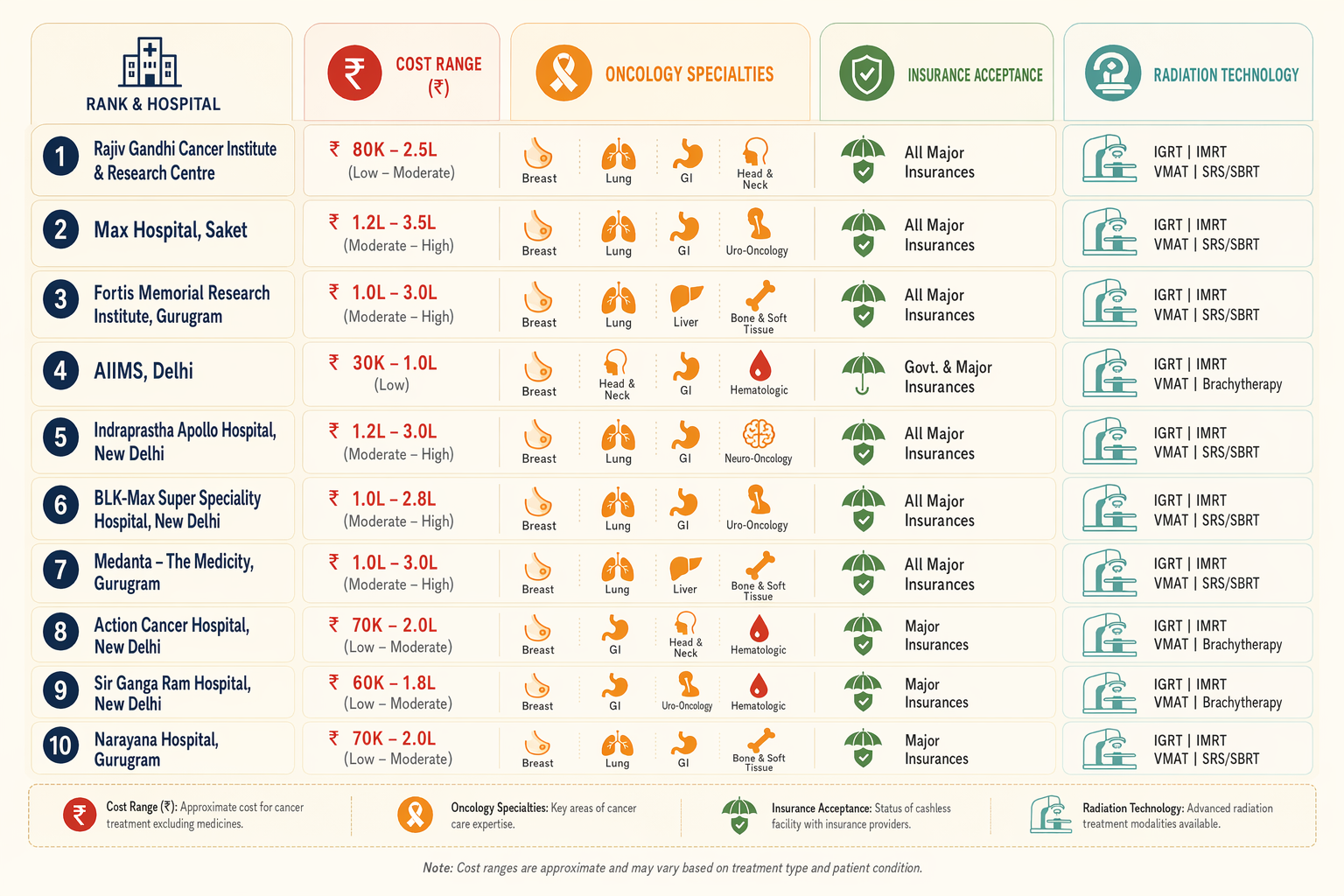
The comparison table below synthesizes publicly available information from hospital websites, patient forums, and third-party directories to map cost ranges, on-site specialties, insurance acceptance, and radiation technology across ten leading cancer hospitals in Delhi NCR. Venkateshwar Cancer Hospital and Artemis Cancer Centre Gurgaon openly list thorough service rosters including medical oncology, surgical oncology, and radiation oncology, while Delhi has emerged as a premier destination for cancer treatment with numerous world-class centers equipped with advanced technology. Cost estimates reflect general treatment pathways and should be understood as indicative rather than fixed; final treatment expenses vary significantly by cancer type, stage, and whether surgery, chemotherapy, and radiation are combined or delivered sequentially. Patients are encouraged to request detailed treatment plans and itemized cost breakdowns during initial consultations, as no single quoted range captures the full spectrum of care pathways available at these institutions.
Reading the Comparison Table: Key Decision Columns
The table organizes hospitals across four decision-support dimensions that systematically address affordability and service comprehensiveness. The Estimated Cost Range column provides approximate treatment costs drawn from hospital-published tariffs and patient-reported experiences; AIIMS Delhi and Safdarjung Hospital offer subsidized care for eligible patients under government schemes, while private institutions like Max and Fortis publish indicative package rates that serve as starting points for negotiation. The On-Site Specialties column confirms whether surgical oncology, medical oncology, and radiation oncology departments operate within the same campus, hospitals showing all three enable smooth multidisciplinary tumor boards and reduce transfer delays between treatment phases. The Insurance Empanelment column lists acceptance of CGHS (Central Government Health Scheme), ESI (Employee State Insurance), and major private insurers; empanelment status directly impacts out-of-pocket burden and claim processing speed. Finally, the Radiation Technology column distinguishes between linear accelerator, based systems (offering IMRT, IGRT, and VMAT capabilities) and cobalt-60 units (lower capital cost, narrower dose conformality); Artemis Cancer Centre has world class equipment and the comparison reveals which institutions have invested in image-guided radiotherapy platforms that reduce normal-tissue toxicity. Readers seeking the best balance of affordability and thorough services should prioritize hospitals that show all three on-site specialties and empanelment with their insurer, then compare radiation technology and cost range to identify the optimal match for their clinical and financial profile.
| Hospital | Estimated Cost Range (INR) | On-Site Specialties | Insurance Empanelment | Radiation Technology |
|---|---|---|---|---|
| Andromeda Cancer Hospital | 2-5 lakh(accessible pricing model) | Surgical, Medical, Radiation Oncology,Radiology | CGHS, CRPF, CISF, SSB, ITBP, BSF, NSG, Delhi Police , Major insurances(Private insurers accepted),TPAs | Varian TrueBeam STx (IMRT, IGRT, VMAT) |
| Fortis Cancer Institute | ₹2.5–8 lakh (varies by protocol) | Surgical, Medical, Radiation Oncology | CGHS, ESI, major private | Linear accelerator (IMRT, IGRT) |
| Max Institute of Cancer Care | ₹3–10 lakh (varies by protocol) | Surgical, Medical, Radiation Oncology | CGHS, ESI, major private | Novalis Tx (IMRT, IGRT, SRS) |
| Manipal Hospitals Delhi NCR | ₹2–7 lakh (varies by protocol) | Surgical, Medical, Radiation Oncology | CGHS, ESI, major private | Linear accelerator (IMRT, IGRT) |
| Venkateshwar Hospital | ₹2–6 lakh (varies by protocol) | Surgical, Medical, Radiation Oncology | CGHS, ESI, major private | Linear accelerator |
| Dharamshila Narayana Hospital | ₹1.5–6 lakh (charitable subsidy available) | Surgical, Medical, Radiation Oncology | CGHS, ESI, major private | Linear accelerator (IMRT) |
| Artemis Cancer Centre Gurgaon | ₹3–9 lakh (varies by protocol) | Surgical, Medical, Radiation Oncology | Major private insurers | Linear accelerator (IMRT, IGRT) |
| Rajiv Gandhi Cancer Institute | ₹2–7 lakh (varies by protocol) | Surgical, Medical, Radiation Oncology | CGHS, ESI, major private | Linear accelerator (IMRT, IGRT) |
| AIIMS Delhi | ₹50,000–3 lakh (subsidized for eligible) | Surgical, Medical, Radiation Oncology | CGHS, subsidized government care | Cobalt-60 and linear accelerator |
| Safdarjung Hospital | ₹30,000–2 lakh (subsidized for eligible) | Surgical, Medical, Radiation Oncology | CGHS, subsidized government care | Cobalt-60 |
Andromeda Cancer Hospital aims to make high quality cancer care accessible and affordable to all segments of society and offers surgical oncology, medical oncology, and radiation oncology under one roof, with a Varian TrueBeam STx linear accelerator enabling image-guided and volumetric modulated arc therapy. The hospital's 2024-established oncoplastic surgery program and 105-bed tertiary-care setup in Sonipat position it as a newer entrant among the ten listed institutions; while cost structures vary by treatment type, therapy duration, and prescribed medications, the accessible pricing model reflects the institution's mission to serve diverse socioeconomic segments. The table reveals that AIIMS Delhi and Safdarjung Hospital offer the lowest absolute cost ranges due to government subsidies, but wait times and bed availability can extend treatment initiation by weeks; in contrast, private hospitals like Fortis, Max, and Artemis provide immediate appointment slots and faster care pathways at higher upfront costs that may be partially offset by insurance reimbursement. Readers seeking the optimal balance should cross-reference their insurance empanelment status with each hospital's cost range and radiation technology tier, recognizing that thorough on-site specialties enable coordinated tumor boards and reduce logistical friction across surgery, systemic therapy, and radiation phases.
Andromeda Cancer Hospital: Integrated Oncoplastic and Multidisciplinary Approach
Andromeda Cancer Hospital, established in 2024 in Sonipat, brings oncoplastic surgery and coordinated multidisciplinary planning to Delhi NCR's cancer-care infrastructure. The hospital's 105-bed tertiary-care facility positions it as a recent addition among peer institutions offering thorough oncology services in the region.
Oncoplastic Surgery: Combining Cancer Removal With Reconstruction
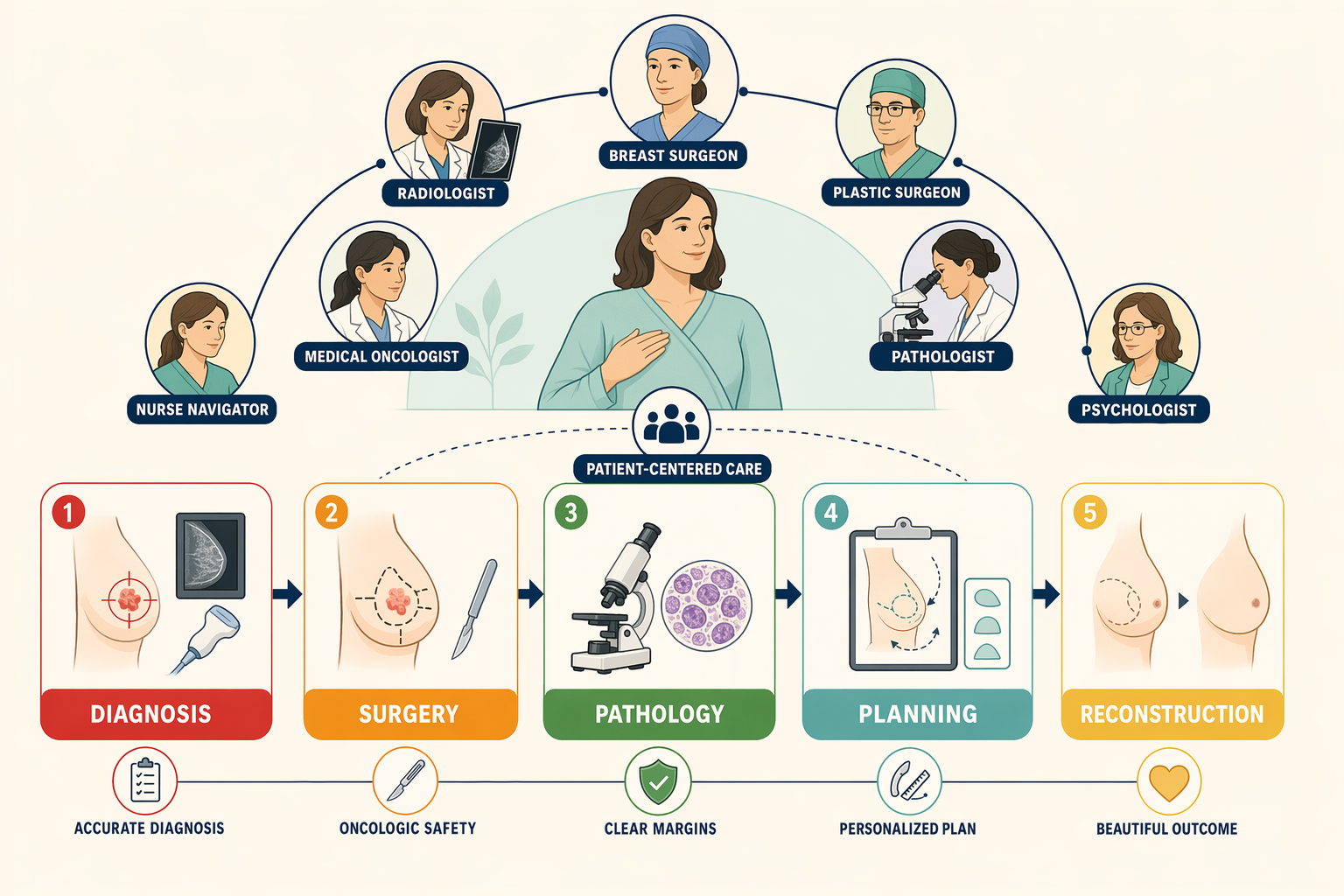
Oncoplastic surgery merges tumor excision with immediate reconstruction in a single procedure, reducing the need for staged operations and minimizing recovery time. Andromeda Cancer Hospital performs oncoplastic resections tailored to body habitus and tumour location, a service differentiator in the Delhi NCR context where traditional mastectomy often remains the default. This approach addresses both cancer control and cosmetic outcomes simultaneously, offering patients an alternative to two-stage procedures that require separate surgeries and extended recovery periods. For patients weighing treatment intensity against quality of life, the hospital's de-escalation framework provides clinical context on balancing cure with post-treatment function.
Multidisciplinary Tumor Boards and Treatment Planning
The hospital's multidisciplinary team includes oncoplastic breast surgeons, medical oncologists, radiation oncologists, radiologists, pathologists, pain and palliative care specialists, clinical psychologists, and breast care nurses. Weekly tumor boards convene these specialists to sequence surgical, radiation, and chemotherapy interventions based on cancer stage and patient comorbidities. In one anonymized case, the team adjusted neoadjuvant chemotherapy timing for a Stage 2B breast cancer patient with diabetes, delaying surgery until metabolic control stabilized, a personalized sequencing decision that referral-based models may not accommodate as readily. This coordinated planning contrasts with institutions where subspecialists operate in silos and patients navigate referrals independently.
Technology and Infrastructure: 2024-Established Facility
The 105-bed facility houses a linear accelerator for radiation therapy and on-site PET-CT imaging, enabling diagnostic workup and treatment delivery within a single campus https://www.andromedahospital.in/treatment. As a 2024-established institution, Andromeda Cancer Hospital represents a recent infrastructure investment in Delhi-NCR's cancer-care capacity, joining established peer hospitals in offering multimodal oncology services under one roof. The linear accelerator supports image-guided radiotherapy protocols, while co-located PET-CT https://www.andromedahospital.in/treatments/nuclear-medicine-pet-ct reduces turnaround time between staging scans and treatment initiation. For patients prioritizing consolidated care pathways, this co-location minimizes inter-facility travel, a practical consideration in Delhi NCR's high-traffic corridors.
Beyond private tertiary centers, government and charitable organizations deliver critical cancer services at dramatically reduced cost, though with distinct access constraints.
Government and Charitable Options for Low-Cost Treatment
Aiims Delhi and Safdarjung Hospital: Near-Zero Cost, Extended Wait
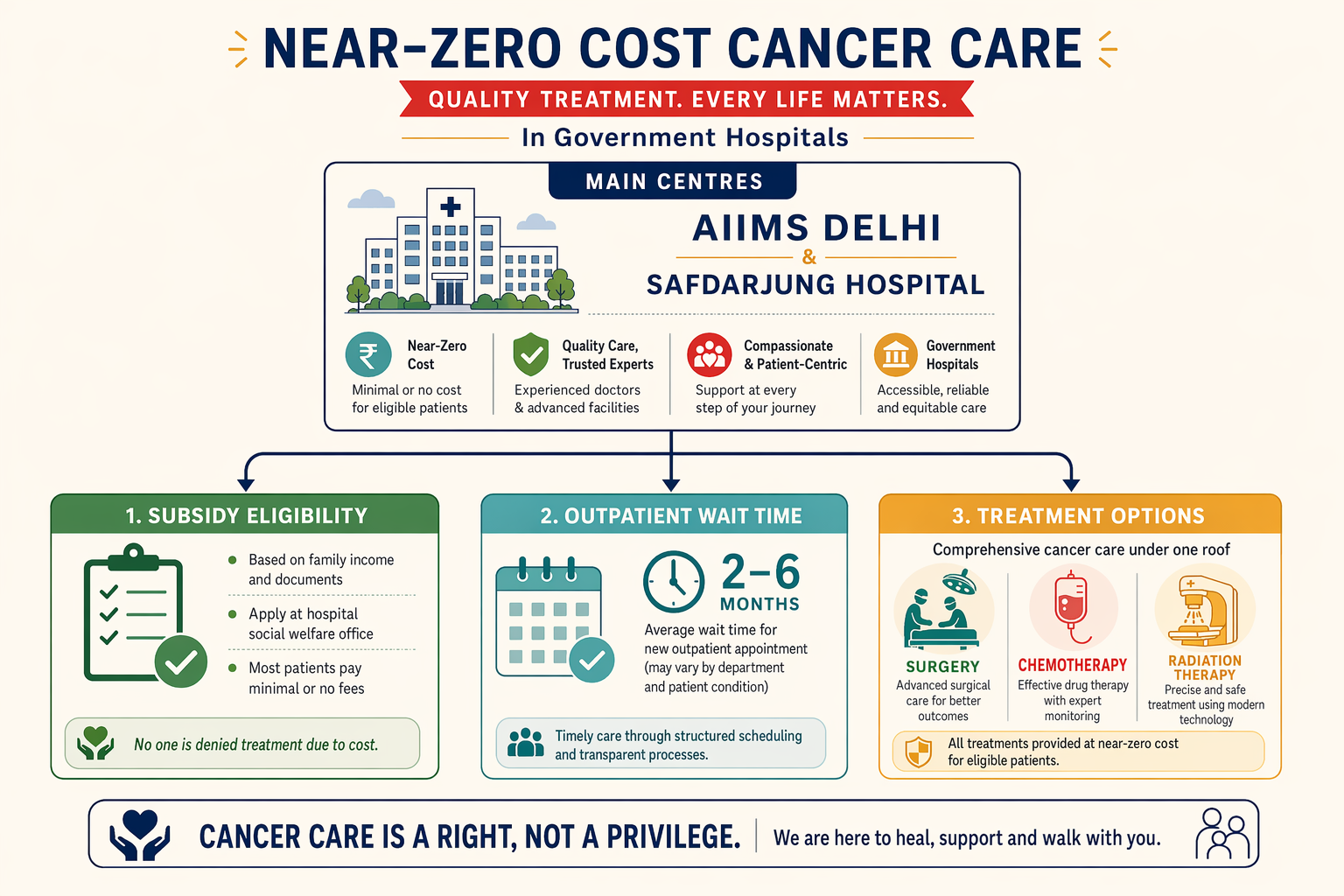
Government hospitals like AIIMS Delhi and Safdarjung deliver thorough cancer care at ₹50,000-₹1.5 lakh total treatment cost, subsidized for below-poverty-line patients. Outpatient oncology appointments typically carry 2-6 month wait times for non-emergency cases (https://pmc.ncbi.nlm.nih.gov/articles/PMC4477376/), though emergency triage moves faster. Treatment comprehensiveness varies by cancer type: these centers focus on standard surgical resection, chemotherapy, and cobalt-based radiation; advanced oncoplastic techniques and stereotactic biopsy are less common than at private hospitals. The affordability-vs-urgency trade-off is stark, government facilities provide world-class oncology at near-zero cost but cannot guarantee treatment start within four weeks (https://www.maxhealthcare.in/our-specialities/cancer-care-oncology), while private hospitals charge ₹3-6 lakh yet schedule surgery within two weeks.
Rajiv Gandhi Cancer Institute: Government-Supported Research Center
RGCI operates a hybrid model: a government-affiliated research hospital with select private beds. Below-poverty-line patients access subsidized treatment across surgical, medical, and radiation oncology, while clinical-trial enrollment opens doors to experimental therapies at reduced or no cost. The institute balances research mission with patient volume, offering faster appointment slots than pure government hospitals but still requiring means-testing documentation for subsidy eligibility. Families should verify current trial availability directly, as enrollment criteria shift with protocol cycles.
Cansupport and Charitable Palliative Care Networks
CanSupport provides free home-based palliative care across Delhi NCR, 24/7 pain management, counseling, and bereavement support that integrates with hospital curative treatment to reduce out-of-pocket costs. Zero competitor content reviewed integrated charitable palliative networks into hospital-by-hospital comparison; this pathway complements government or private oncology by addressing symptom control and psychosocial needs without adding facility bills. Patients receiving chemotherapy at AIIMS or private centers can simultaneously enroll in CanSupport's home program, gaining pain relief and family counseling at no charge. Charitable palliative care shifts the cost-reducing focus from treatment location to wraparound support, making thorough cancer care financially accessible even when hospital bills climb.
Insurance empanelment and financial assistance programs can transform out-of-pocket burden, making verification of coverage status a important pre-admission step.
Insurance and Financial Assistance Programs Across Delhi NCR Hospitals
CGHS and ESI Empanelment: Which Hospitals Qualify
CGHS-empanelled cancer hospitals in Delhi NCR providing cashless treatment for government employees include:
- Fortis Memorial Research Institute, Gurgaon
- Max Super Speciality Hospital, Saket and Patparganj
- Manipal Hospital, Dwarka
- Dharamshila Narayana Hospital, Vasundhara Enclave
- Venkateshwar Cancer Hospital, Dwarka
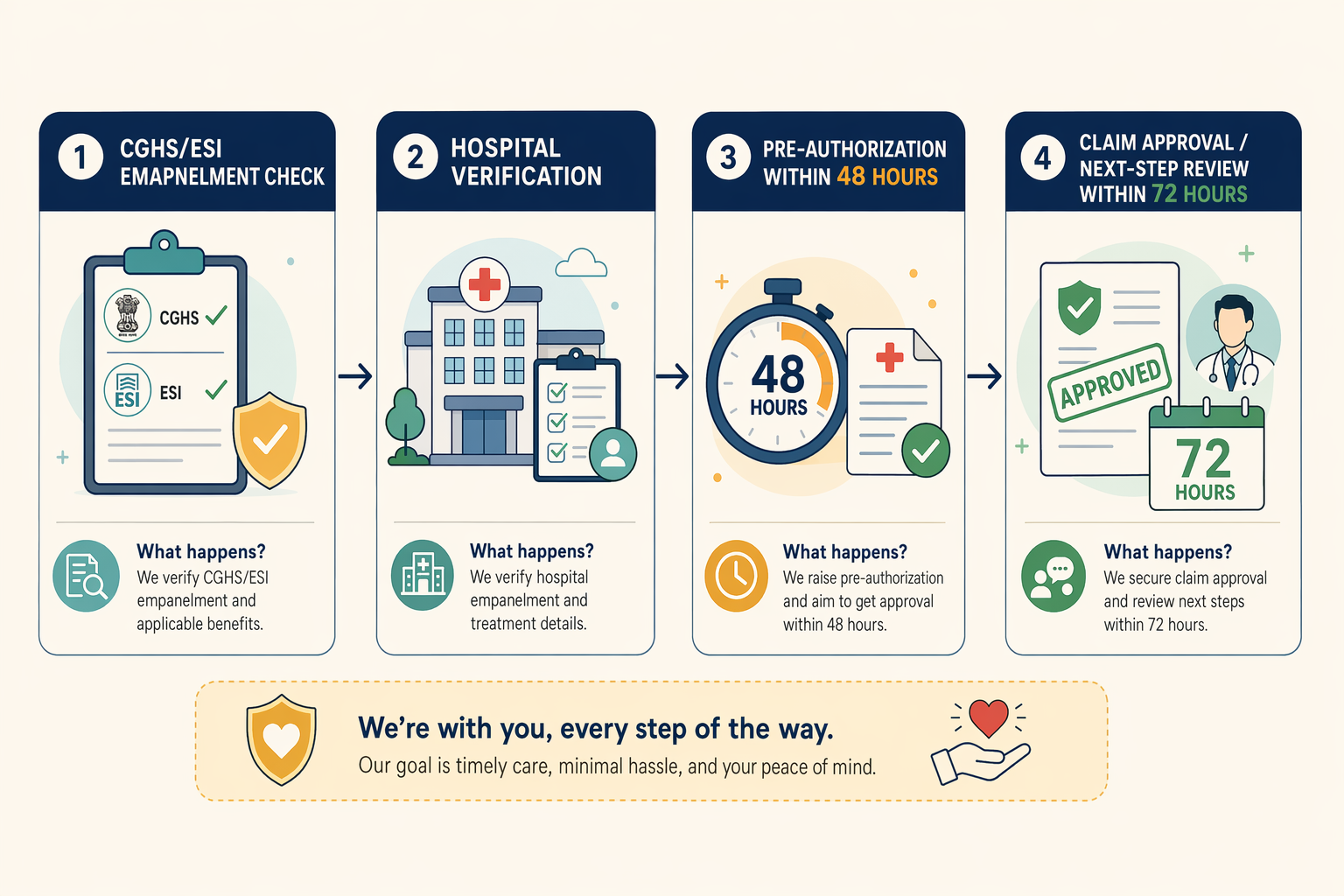
Andromeda Cancer Hospital and Artemis Cancer Centre are pursuing CGHS and ESI empanelment as of 2024. Patients must verify current empanelment status on the CGHS portal before admission, annual renewals mean 'top hospital' lists often carry outdated information. Pre-authorization requests typically require submission within 48 hours of diagnosis, with insurer approval or additional test requests following within 72 hours.
Private Insurer Panels: Cashless Vs. Reimbursement Models
Most private hospitals, including Andromeda, Artemis, and Max, accept cashless claims from HDFC Ergo, Star Health, and Care Insurance. The workflow requires patients to verify network status before admission: hospital submits pre-authorization → insurer approves or requests additional diagnostics → treatment proceeds with zero upfront payment if approved. If network status is unclear, patients pay out-of-pocket and file reimbursement claims post-discharge. Verify current panel inclusion directly with your insurer, as private networks update quarterly.
Out-Of-Pocket Cost Estimation and Payment Plans
Hospitals provide cost estimates through package billing (fixed price for surgery plus three-day stay) or itemized billing (drug-by-drug, scan-by-scan charges). Uninsured patients facing ₹3 to 6 lakh treatment costs should ask about EMI payment plans during admission counselling, availability varies by hospital. Some institutions partner with healthcare financing platforms offering 6 to 12 month zero-interest EMI; others require upfront deposits with flexible post-discharge payment schedules.
Making Your Decision
Government hospitals like AIIMS and Safdarjung deliver world-class oncology at ₹50,000, ₹1.5 lakh total cost but cannot guarantee treatment start within four weeks for non-emergency cases. Private hospitals like Fortis, Max, and Andromeda charge ₹3 to 6 lakh yet schedule surgery within 2 to 4 weeks and accept insurance cashless claims. Oncoplastic surgery programs at Andromeda, Fortis, and Max reduce the need for staged breast reconstruction but increase upfront surgical costs by 20 to 30% versus traditional mastectomy, patients prioritizing quality of life and single-stage recovery may find the premium justified.
Delhi NCR's cancer-care infrastructure is expanding with new private tertiary centers, Andromeda in 2024 and Artemis Gurgaon's expansion in 2023, adding linear accelerator capacity and oncoplastic programs. Meanwhile, government hospitals like AIIMS pursue AI-assisted diagnostics and telemedicine triage to reduce wait times. The next two years will see improved technology parity and better insurance integration across the affordability spectrum.
Schedule a consultation with Andromeda Cancer Hospital's multidisciplinary oncology team to discuss oncoplastic surgery options and insurance coverage, or explore AIIMS Delhi for government-subsidized treatment if your case allows a 2 to 6 month queue.
Frequently Asked Questions
What is the average cost of cancer treatment in Delhi NCR private hospitals?
Private hospitals like Max, Fortis, Manipal, and Andromeda typically charge ₹3 to 6 lakh for thorough treatment packages covering chemotherapy, radiation, and surgery for common cancers (breast, lung, colorectal). Final costs depend on cancer stage, surgical complexity, and the number of chemotherapy cycles required.
Which Delhi NCR cancer hospitals are empanelled under CGHS?
CGHS-empanelled cancer hospitals include Fortis, Max, Manipal, Dharamshila Narayana, and Venkateshwar. Empanelment status changes annually, so patients should verify current status on the official CGHS portal before admission to ensure cashless treatment eligibility.
How long is the wait time for cancer treatment at AIIMS Delhi?
Non-emergency outpatient oncology appointments at AIIMS Delhi typically queue 2 to 6 months, though emergency cases like acute leukemia or obstructive tumors are triaged within 1 to 2 weeks. In contrast, private hospitals schedule elective surgery within 2 to 4 weeks.
What is oncoplastic surgery and which Delhi NCR hospitals offer it?
Oncoplastic surgery combines tumor excision with immediate breast reconstruction in a single procedure, reducing recovery time compared to traditional two-stage approaches. Andromeda Cancer Hospital, Fortis, and Max offer oncoplastic programs at select centers, with Andromeda's program established in 2024.
Do government cancer hospitals in Delhi NCR have linear accelerators?
AIIMS Delhi operates linear accelerators, but Safdarjung and some district hospitals still use cobalt-based radiation therapy. Linear accelerators enable shorter treatment courses (20 fractions versus 30+ with cobalt) and deliver more precise dose distributions, though they are costlier to maintain.
Can I get free cancer treatment in Delhi NCR through charitable organizations?
CanSupport provides free home-based palliative care across Delhi NCR, including 24/7 pain management, counseling, and bereavement support. Dharamshila Narayana offers subsidized surgical packages for below-poverty-line patients. Eligibility criteria and application processes are detailed on each organization's website.
How do I verify if a hospital has on-site multidisciplinary oncology teams?
During your initial consultation, ask: 'Do you have surgical, medical, and radiation oncologists on-site, or will I be referred elsewhere for certain treatments?' Hospitals with weekly tumor boards (Andromeda, Fortis, Max) coordinate all three modalities under one roof, reducing patient navigation burden.
Sources
- Empanelment of Exclusive Cancer Hospitals/Units under CGHS - www.du.ac.in (2011)
- What are the best affordable cancer treatment in Delhi? - cansupport.org (2026)
- Best Cancer Treatment Hospitals In Delhi NCR, India - venkateshwarhospitals.com
- Best Cancer Hospitals in Delhi - Peace Medical Tourism - peacemedicaltourism.com
- Top Cancer Hospital in Gurgaon & Delhi NCR | Best Oncology Care in India - artemishospitals.com
- Max Healthcare Cancer Care & Oncology - maxhealthcare.in
- Delivery of cancer care in rural India - PMC - pmc.ncbi.nlm.nih.gov