
Breast cancer treatment in Delhi NCR involves navigating marketing claims about 'multidisciplinary care' that rarely specify whether specialists actually collaborate on individual cases or simply share a building.
This evaluation framework identifies verifiable criteria—tumor board frequency, oncoplastic surgery availability, and same-roof diagnostic coordination—that differentiate documented integration from co-location labeling.
Key Takeaways
- True multidisciplinary care requires documented tumor board meetings with specified frequency—weekly or twice-weekly schedules ensure your case receives collaborative review before treatment decisions
- Oncoplastic breast surgery training enables larger tumor resections with breast symmetry preservation, reducing default-to-mastectomy patterns when general surgical oncologists lack specialized fellowship credentials
- Same-roof diagnostic services (imaging, pathology, radiation planning) eliminate referral delays between disconnected departments, accelerating the biopsy-to-treatment pathway from 8+ weeks to 3-6 weeks
- Patients can verify multidisciplinary integration by requesting written tumor board recommendations, confirming surgeon fellowship training, and checking CGHS oncology empanelment before admission
What Defines True Multidisciplinary Breast Cancer Care?
True multidisciplinary breast cancer care means documented team-based treatment planning—not just co-located specialists in the same building. Physical co-location differs fundamentally from operational integration. When evaluating hospitals in Delhi NCR, ask whether surgical, medical, and radiation oncologists convene regularly to review cases together, with recorded minutes and evidence-based protocols, or whether they operate in separate departments with minimal cross-consultation.
Co-Located Specialists Vs. Integrated Teams
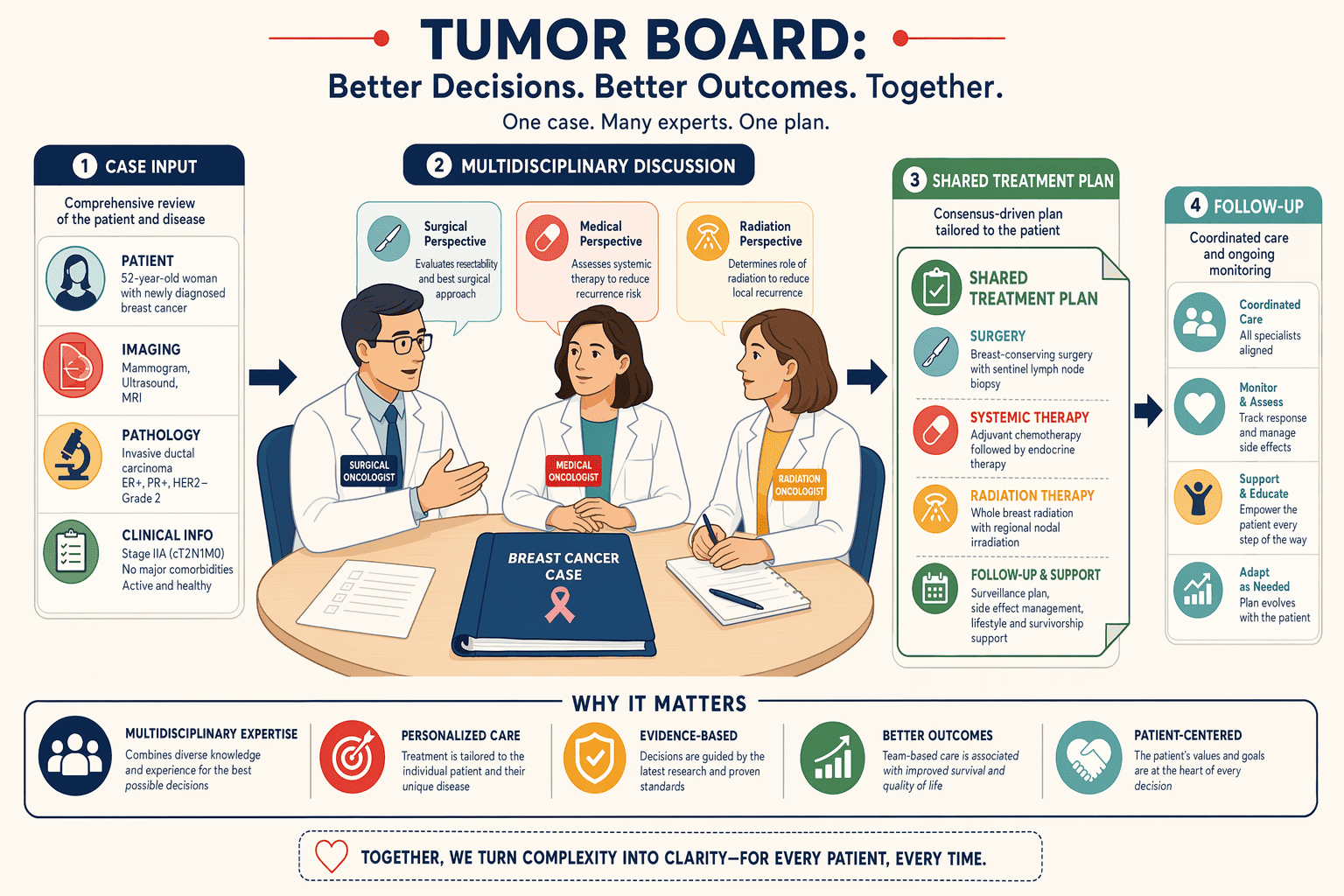
Many hospitals list oncologists under 'multidisciplinary care' without specifying whether these specialists collaborate on individual patient cases. Operational integration requires documented weekly tumor boards where medical oncology, surgery, radiology, radiation oncology, pathology, research, clinical trials, and epidemiology specialists review each patient's clinical history, imaging, and pathology to create individualized treatment plans. Facilities like Max Institute of Cancer Care mention 'multidisciplinary' in marketing materials, but the term alone does not guarantee same-roof coordination or oncoplastic training. Some hospitals may keep surgical and medical oncologists in separate departments with minimal cross-consultation. Verify whether the hospital holds mandatory tumor board meetings and whether minutes document consensus recommendations for your case.
Tumor Board Meetings: Mandatory Vs. Optional Review
The frequency and documentation standards of tumor board meetings separate active coordination from nominal labels. A tumor board is a multidisciplinary team of cancer specialists who collaborate to create personalized treatment plans, bringing together medical, radiation, surgical, and nuclear medicine experts for coordinated treatment recommendations. Andromeda Cancer Hospital convenes multidisciplinary tumor board meetings twice weekly, with surgical oncologists, oncoplastic breast surgeons, medical oncologists, radiation oncologists, radiologists, pathologists, and pain and palliative care specialists participating. Every newly diagnosed, recurrent, metastatic, and complex cancer case is evaluated in this forum to ensure treatment plans reflect current guidelines and collective expertise rather than a single specialist's perspective. Ask prospective hospitals for evidence of documented tumor board frequency and whether case review is mandatory or discretionary.
Same-Roof Diagnostic Services and Turnaround Times
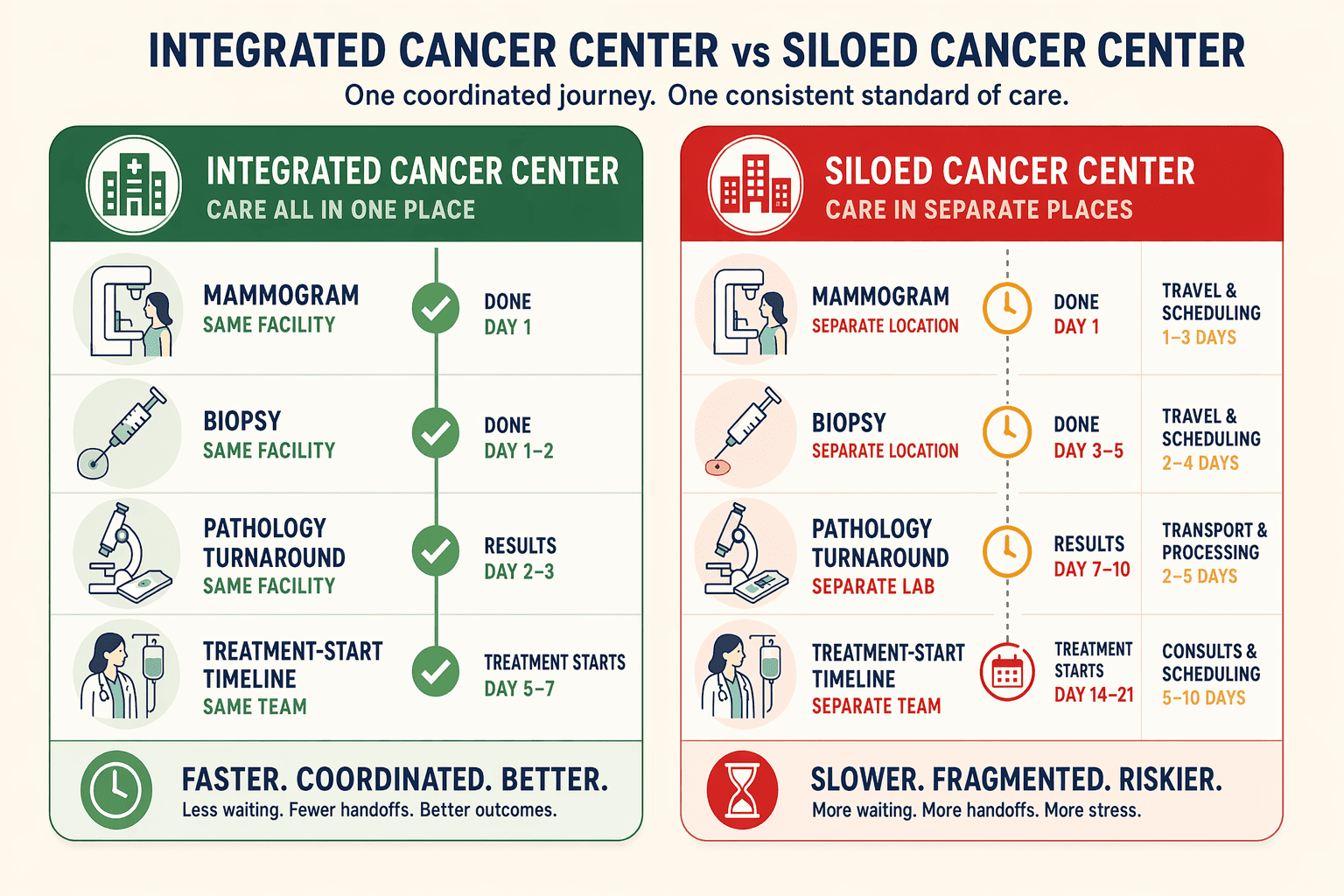
Integrated radiology, pathology, and treatment planning under one roof accelerates the diagnosis-to-treatment pathway by eliminating referral delays between disconnected departments. When imaging, biopsy processing, and multidisciplinary consultation occur on-site, the team can coordinate treatment modifications based on pre- and post-neoadjuvant imaging without waiting for external lab results or separate appointments. Andromeda Cancer Hospital offers personalized treatment planning through multidisciplinary discussions based on international management guidelines, with same-roof services supporting rapid turnaround. Confirm whether the hospital provides CT simulation, stereotactic biopsy capability, and on-site histopathology—these logistics determine whether the multidisciplinary team can act on shared information within days rather than weeks.
Understanding what distinguishes coordinated care from nominal labels requires examining how operational integration translates into patient outcomes.
Why Multidisciplinary Treatment Matters for Breast Cancer Outcomes
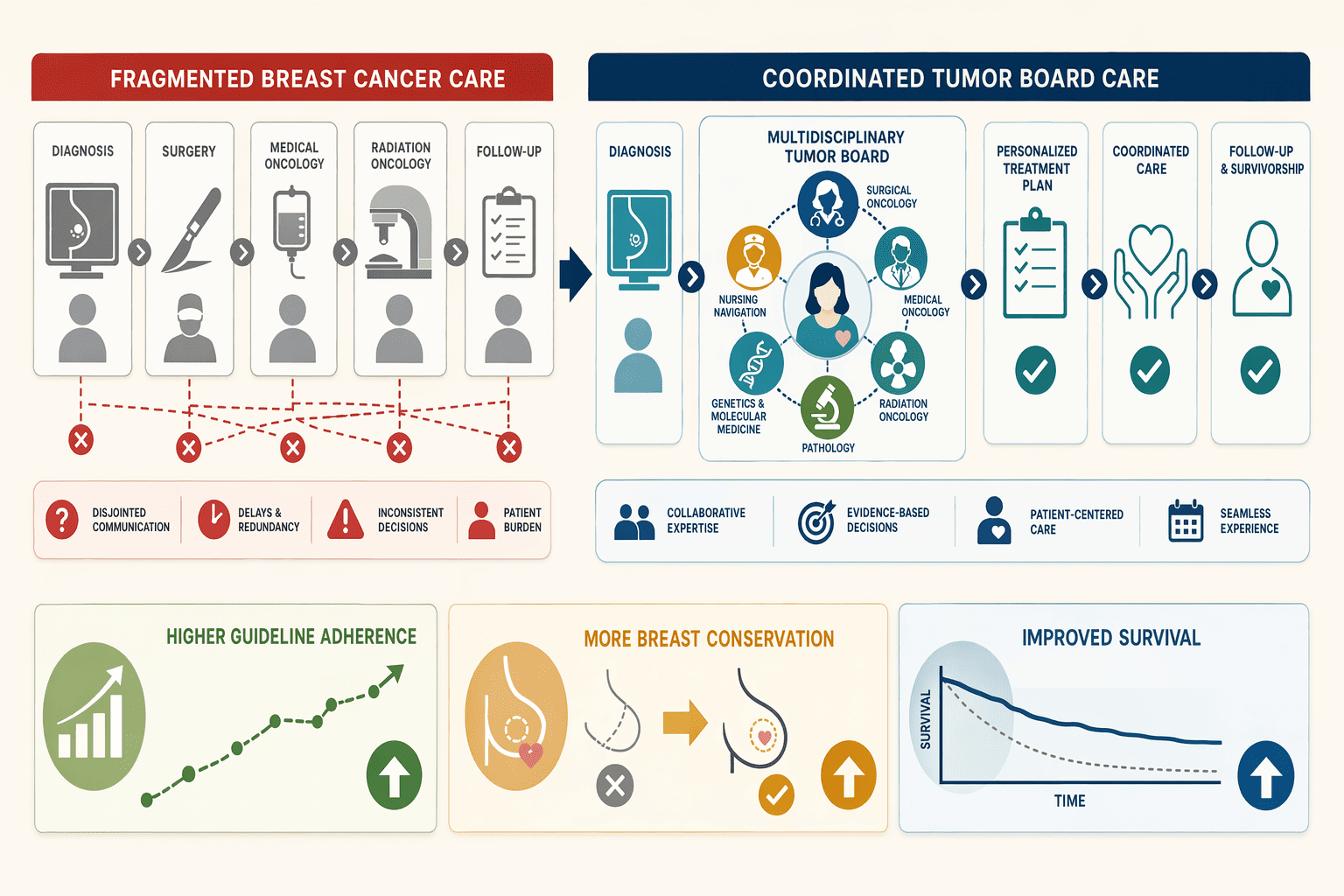
Coordinated multidisciplinary care translates operational integration into measurable patient outcomes, treatment adherence climbs, breast conservation rates rise, and survival matches or exceeds mastectomy benchmarks when teams document consensus decisions rather than relay fragmented opinions.
Treatment Adherence to International Guidelines
Formal tumor board review increases adherence to NCCN and St. Gallen protocols. Studies documenting breast-specific multidisciplinary teams report guideline-concordant treatment plans in 66.4% of oncologically eligible patients, compared to lower adherence in settings where surgical, medical, and radiation oncology opinions arrive sequentially without synthesis. Same-day review reduces both under-treatment, omitting recommended adjuvant therapy, and over-treatment, unnecessary mastectomy when breast conservation plus radiation yields equivalent disease-free survival and overall survival.
Breast Conservation Rates and Surgical Outcomes
Oncoplastic training availability shapes surgical decision-making. Surgeons who completed specialized breast conservation or oncosurgical fellowships are 35 times more likely to offer breast-conserving surgery to eligible candidates, reversing the default-to-mastectomy pattern driven by the belief that mastectomy is 'safer' or 'more thorough.' Oncoplastic resections, tailoring excision to body habitus and tumor location, preserve cosmesis without compromising local control; outcomes after breast conservation therapy followed by radiation match mastectomy survival.
Treatment Sequencing and Delays
Same-roof integration reduces time-to-treatment initiation. When surgery schedules treatment then refers the patient to a separate medical oncology facility weeks later, adjuvant chemotherapy or hormone therapy delays accumulate. Coordinated multidisciplinary planning, surgical, medical, and radiation oncologists reviewing imaging, pathology, and staging together, sequences therapies in real time, preventing siloed department handoffs that stretch neoadjuvant or adjuvant windows.
Translating outcome evidence into actionable verification questions requires specific evaluation criteria patients can apply when comparing hospitals.
How to Evaluate Multidisciplinary Integration: Key Criteria
Tumor Board Verification Questions
Ask these specific questions when evaluating hospital tumor boards:
- Meeting frequency: Weekly or twice-weekly? (Twice-weekly meetings reduce time-to-treatment by 3 to 5 days.)
- Review scope: Are all newly diagnosed cases reviewed, or only 'complex' cases? (Mandatory review catches treatment gaps selective boards miss.)
- Specialty participation: Which specialties attend by name? Look for surgical oncology, oncoplastic breast surgery, medical oncology, radiation oncology, radiology, pathology, and palliative care, not just 'oncology team.'
- Documentation access: Can you receive a written summary of the tumor board's treatment recommendation? (Hospitals that provide documented plans demonstrate accountability.)
- Timeline: How many days from biopsy to tumor board discussion to treatment plan delivery? (Integrated centers complete this cycle in 7 to 10 days; siloed hospitals take 3 to 4 weeks.)
Oncoplastic Surgery Training and Credentials
Verify surgeon qualifications beyond general surgical oncology certification:
- Fellowship credentials: Look for formal oncoplastic breast surgery fellowship training (MCh, FEBS, or equivalent), not just surgical oncology board certification.
- Procedure volume: Request the surgeon's annual breast conservation vs. Mastectomy ratio and oncoplastic procedure count. (Surgeons performing fewer than 10 oncoplastic resections per year lack the volume to maintain consistent outcomes.)
- Breast conservation philosophy: Does the hospital's surgical team default to mastectomy or actively pursue breast-conserving options? (Centers with oncoplastic programs report 60 to 70% breast conservation rates; traditional surgical teams average 30 to 40%.)
Same-Roof Service Availability Checklist
Confirm these diagnostic and treatment services operate within the same facility :
- Radiology: 3D mammography (tomosynthesis), breast MRI, PET-CT (for staging)
- Pathology: In-house immunohistochemistry with ≤72-hour turnaround (outsourced IHC adds 5 to 7 days)
- Medical oncology: Chemo-daycare unit for outpatient infusions (eliminates multi-site travel for systemic therapy)
- Radiation oncology: IMRT/IGRT capabilities and CT simulation (on-site radiation planning shortens neoadjuvant-to-surgery intervals)
- Supportive care: Palliative care and psycho-oncology services accessible without referral
Integrated centers deliver mammogram, biopsy, and pathology results within 24 to 72 hours. Siloed hospitals where radiology, pathology, and oncology operate in separate buildings extend this timeline to 10 to 21 days, delaying treatment initiation when early intervention matters most.
Applying these evaluation criteria to Delhi NCR's cancer treatment landscape reveals wide variation in documented coordination beneath uniform marketing claims.
Comparing Delhi NCR Cancer Centers for Multidisciplinary Breast Cancer Care
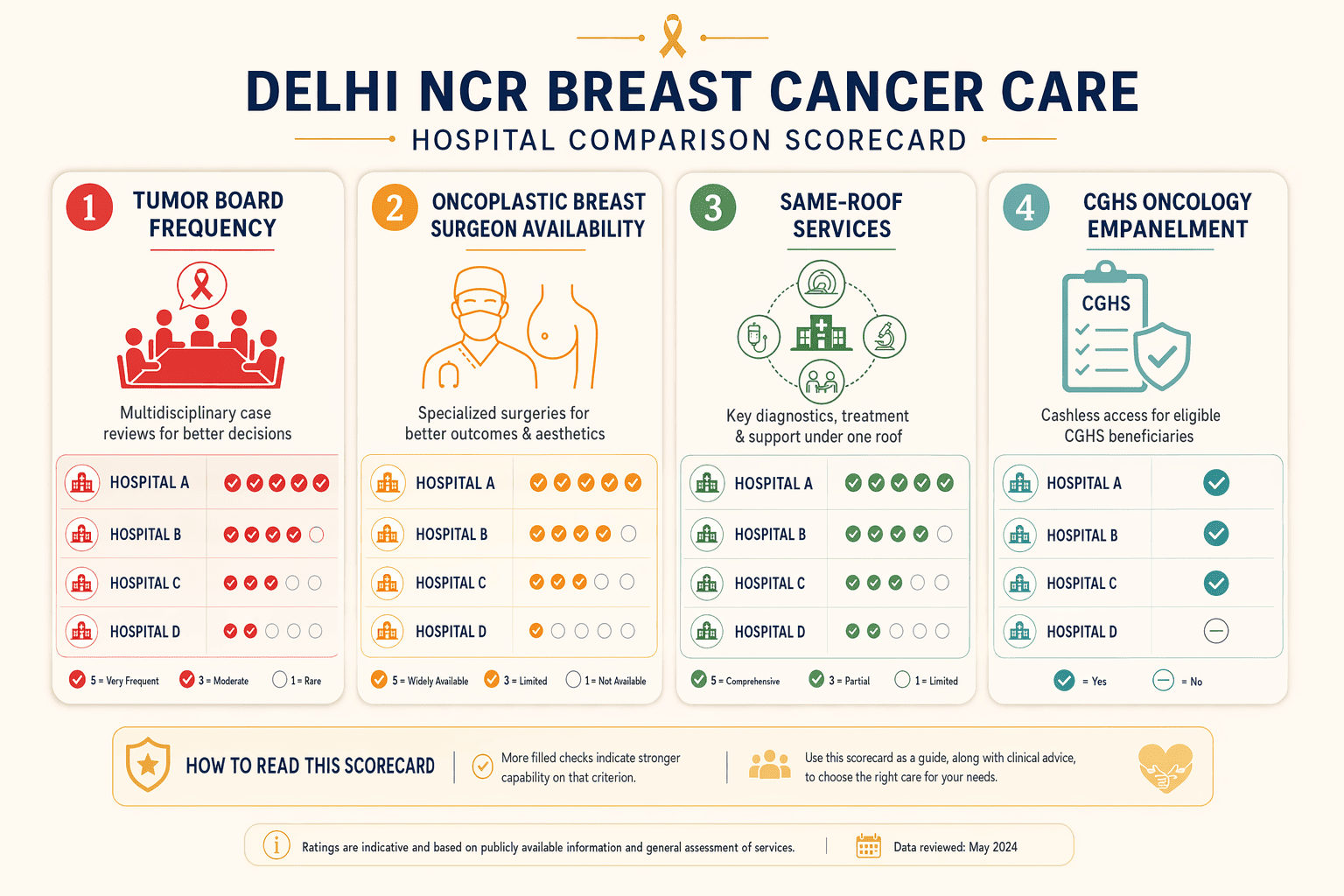
Patients seeking breast cancer care in Delhi NCR face a landscape where 'multidisciplinary' appears in many hospital marketing materials, but verifiable coordination varies widely. The evaluation framework below applies documented criteria patients can ask each hospital to confirm: tumor board frequency, oncoplastic breast surgeon availability, same-roof integrated services, and CGHS empanelment for oncology specifically (not just general care).
Tumor Board Frequency and Specialty Participation
Tumor boards convene specialists to review imaging, pathology, and treatment options, but frequency determines whether your case receives multidisciplinary review before key treatment decisions. Andromeda Cancer Hospital convenes tumor boards twice weekly with surgical oncologists, oncoplastic breast surgeons, medical oncologists, radiation oncologists, radiologists, pathologists, and palliative care specialists. Apollo Cancer Centre at Indraprastha Apollo Hospitals lists 'Tumor Board & Group Tumor Board' under services but does not disclose meeting frequency on its public-facing pages. Max Super Speciality Hospital and Rajiv Gandhi Cancer Institute reference multidisciplinary care models without documenting board schedules. Ask each hospital: How often does the tumor board meet? Which specialists attend by default? Can I request board review for my case before surgery?
Oncoplastic Surgery and Breast Conservation Programs
Oncoplastic breast surgery combines oncologic resection with plastic surgery techniques to preserve breast contour, reducing the default-to-mastectomy pattern when general surgical oncologists lack this training. Andromeda Cancer Hospital employs oncoplastic breast surgeons trained in breast conservation techniques tailored to body habitus and tumor location, distinguishing it from hospitals where general surgical oncologists perform mastectomies without oncoplastic options. Apollo Athenaa's breast cancer program describes minimally invasive surgery but does not specify whether oncoplastic surgeons are on staff or if reconstructions are performed by separate plastic surgery teams. Verification question: Does your surgeon hold oncoplastic breast surgery certification (MCh or equivalent fellowship)? What percentage of your early-stage breast cancer cases result in breast conservation vs. Mastectomy?
Integrated Diagnostic and Treatment Services
Same-roof integration eliminates the coordination gaps that arise when radiology, pathology, medical oncology daycare, radiation oncology, and palliative care operate in separate facilities, each with independent scheduling and medical record systems. Andromeda Cancer Hospital provides diagnostic imaging (3D mammography/tomosynthesis), onco-pathology with frozen section reporting, chemo-daycare, on-site radiation therapy, and palliative care under one roof. Max Institute of Cancer Care lists Novalis Tx for IMRT/IGRT and a Da Vinci XI Robotic System, indicating advanced radiation and surgical platforms, but public materials do not clarify whether pathology, imaging, and medical oncology are co-located or require patient transfers between Max network facilities. Ask: Are all cancer services, diagnostic imaging, pathology, chemotherapy infusion, radiation, palliative care, available on the same campus, or will I need to travel between facilities for different treatment phases?
| Hospital | Tumor Board Frequency | Oncoplastic Breast Surgeon | Same-Roof Services | CGHS Empanelment (Oncology) |
|---|---|---|---|---|
| Andromeda Cancer Hospital | Twice weekly | Yes — oncoplastic breast surgeons on staff | Radiology, pathology, medical oncology daycare, radiation oncology, palliative care | Yes its verified, displayed on website |
| Apollo Cancer Centres , Delhi NCR | Not publicly disclosed | Not specified in public materials | Standalone cancer unit with superspeciality backup | Verify empanelment certificate for oncology services |
| Manipal Hospital, Delhi | Not publicly disclosed | Not specified in public materials | Not publicly disclosed | Verify empanelment certificate for oncology services |
| Max Super Speciality Hospital, Saket | Not publicly disclosed | Not specified in public materials | Novalis Tx IMRT/IGRT, Da Vinci XI robotic surgery — co-location unclear | Verify empanelment certificate for oncology services |
| Rajiv Gandhi Cancer Institute | Not publicly disclosed | Not specified in public materials | Not publicly disclosed | Verify empanelment certificate for oncology services |
Not every breast cancer patient requires every treatment modality, sequencing depends on stage, tumor biology, and patient factors. Multidisciplinary teams tailor treatment rather than apply a standard protocol. When comparing hospitals, request documentation: tumor board meeting minutes (redacted for privacy), the surgeon's oncoplastic training credentials, and a facilities map showing co-location of diagnostic and treatment services. CGHS empanelment for general care does not guarantee oncology coverage, confirm that the hospital's empanelment certificate explicitly lists cancer treatment services.
The first verification criterion, tumor board meeting frequency and documentation standards, determines whether your case receives collaborative review or siloed decision-making.
Tumor Board Frequency and Documentation: What to Ask
Marketing materials listing oncology departments do not prove weekly tumor board activity or coordinated treatment planning, verification is key. When comparing hospitals, ask these five questions to confirm genuine multidisciplinary coordination:
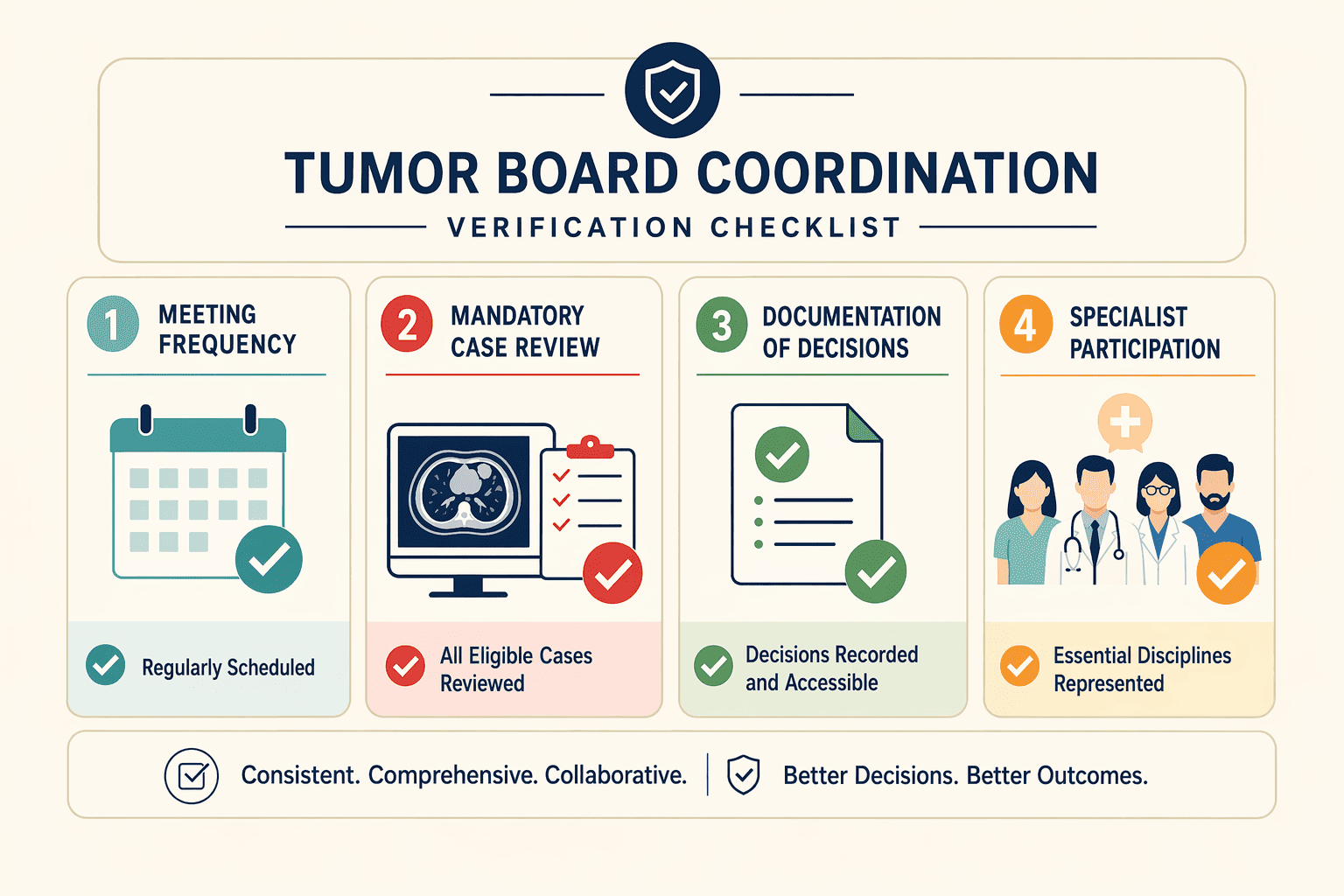
- How often does the breast cancer tumor board meet?
- Is review mandatory for all cases or only complex cases?
- Which specialties attend by name?
- Can I receive a copy of the documented treatment plan from the tumor board discussion?
- How long from biopsy results to tumor board review?
Weekly Vs. Twice-Weekly Vs. As-Needed Tumor Boards
'As-needed' or 'complex case only' tumor boards mean most patients receive siloed care, surgical oncologists decide on mastectomy without medical oncology or radiation oncology input, then refer patients afterward. Regular mandatory review schedules ensure coordinated treatment planning across specialties. Andromeda Cancer Hospital convenes multidisciplinary tumor board meetings twice weekly, use this baseline when comparing hospitals.
Accessing Your Treatment Plan Documentation
Request a copy of the documented tumor board recommendations before treatment begins. Documentation access verifies that your case was actually reviewed by the full team, not just claimed in marketing materials. Some patients receive results within 10 minutes of their scan, while others wait days for coordinated review.
Beyond tumor board frequency, the availability of oncoplastic breast surgery directly shapes whether breast conservation remains an option for larger or centrally located tumors.
Oncoplastic Surgery Availability and Breast Conservation Options
What Is Oncoplastic Breast Surgery?
Oncoplastic breast surgery integrates cancer resection with plastic surgery reconstruction techniques, allowing larger lumpectomies while maintaining breast symmetry and acceptable cosmetic outcomes. This approach expands breast conservation eligibility beyond small early-stage tumors; patients with larger lesions or unfavorable tumor locations can preserve the breast when an oncoplastic-trained surgeon performs volume-displacement or volume-replacement techniques. https://www.andromedahospital.in/treatments/breast-oncologyoffers oncoplastic breast conservation surgery, tailored to body habitus and tumor location.
Verifying Surgeon Training and Procedure Volume
To confirm a surgeon's oncoplastic expertise, ask for fellowship credentials in oncoplastic breast surgery, Indian Association of Surgical Oncology training or international fellowships signal specialized preparation beyond general surgical oncology. Request the hospital's breast conservation rate: facilities performing breast-conserving surgery in fewer than 30% of eligible cases likely lack oncoplastic capability or radiation oncology coordination. The multidisciplinary team approach concentrates clinical experience from multiple specialties, enabling collaborative decision-making that increases breast conservation rates through coordinated surgical and radiation planning.
When Mastectomy Is Necessary Vs. Offered as Default
Mastectomy is clinically indicated for multicentric disease, extensive ductal carcinoma in situ (DCIS), or patient preference, but many hospitals default to mastectomy simply because they lack oncoplastic surgeons or same-site radiation oncology access. All early breast cancers may not require chemotherapy, treatment is individualized. Similarly, multidisciplinary teams individualize surgery selection (breast conservation versus mastectomy) based on tumor biology and patient factors, not surgeon training limitations. Verifying oncoplastic training and conservation rates helps patients distinguish evidence-based mastectomy indications from institutional defaults.
Making an Informed Choice
Larger tertiary cancer centers like Rajiv Gandhi Cancer Institute and Apollo Cancer Centres offer broader oncology subspecialties but may have less frequent tumor board review for breast cancer specifically; dedicated breast cancer centers with twice-weekly tumor boards provide faster multidisciplinary treatment planning but narrower oncology scope. Hospitals with CGHS empanelment for oncology services ensure cashless treatment for government employees but may have longer wait times for non-emergency procedures, while non-empaneled specialized centers offer faster appointment scheduling but require upfront payment with reimbursement claims.
As breast cancer treatment in India increasingly adopts genomic testing (Oncotype DX, MammaPrint) to guide chemotherapy decisions, multidisciplinary tumor boards that integrate molecular pathologists and genetic counselors alongside surgical, medical, and radiation oncologists will become the standard for personalized treatment sequencing, patients should ask hospitals whether their tumor boards include genomic testing discussion protocols.
Compare Delhi NCR cancer hospitals using the tumor board verification questions and oncoplastic training checklist above, then request documented treatment plans from each hospital's tumor board to confirm multidisciplinary integration before committing to care. Andromeda Cancer Hospital's twice-weekly tumor board schedule and oncoplastic breast surgery program provide one documented benchmark for your comparison.
Frequently Asked Questions
How can I verify if a hospital's tumor board actually meets regularly?
Request documented tumor board meeting schedules and ask for a written treatment plan referencing the multidisciplinary discussion. Hospitals with active tumor boards provide treatment plans citing specific recommendations from surgical, medical, and radiation oncologists who reviewed your imaging and pathology together, marketing materials listing departments do not prove coordination.
What is the difference between a surgical oncologist and an oncoplastic breast surgeon?
Surgical oncologists are trained in cancer resection; oncoplastic breast surgeons complete additional fellowship training in plastic surgery reconstruction techniques that preserve breast symmetry during larger tumor removals. This specialized training expands breast conservation eligibility beyond small early-stage tumors, reducing default-to-mastectomy patterns when general surgical oncologists lack oncoplastic credentials.
Do all breast cancer patients need chemotherapy?
All early breast cancers may not require chemotherapy, treatment is individualized. Multidisciplinary tumor boards determine chemotherapy need based on tumor stage, hormone receptor status, HER2 status, and genomic testing like Oncotype DX scores. Early-stage hormone-positive tumors often avoid chemotherapy when genomic tests show low recurrence risk and multidisciplinary review confirms appropriate treatment sequencing.
How long should it take from biopsy to starting treatment?
Integrated care coordinates biopsy-to-pathology results in 5-7 days, pathology-to-tumor-board discussion in 7-10 days, and tumor-board-to-treatment-initiation in 2-4 weeks, totaling 3-6 weeks. Delays beyond 8 weeks signal siloed departments operating on independent schedules rather than coordinated same-roof pathways where imaging, biopsy processing, and multidisciplinary consultation accelerate treatment planning.
Is CGHS empanelment important for cancer treatment in Delhi NCR?
CGHS empanelment for oncology services specifically (not just general care) ensures government employees and pensioners access cancer treatment with cashless procedures. Verify empanelment covers chemotherapy, radiation oncology, surgical oncology, and targeted therapies, not all hospitals empaneled for general care have oncology empanelment, requiring upfront payment and reimbursement claims instead.
What role does palliative care play in breast cancer treatment?
Palliative care is symptom management and quality-of-life support integrated from diagnosis onward, not end-of-life care. Multidisciplinary breast cancer teams include palliative care specialists for pain management, treatment side-effect mitigation, and psychological support alongside surgical, medical, and radiation oncologists, improving patient outcomes through coordinated symptom control during active treatment phases.
Can I get a second opinion from a multidisciplinary tumor board?
Some hospitals offer second-opinion tumor board reviews where the multidisciplinary team reviews external pathology, imaging, and treatment plans, providing documented recommendations distinct from single-specialist consultations. Ask hospitals if they provide documented second-opinion tumor board reviews that include surgical, medical, and radiation oncology perspectives, not just individual specialist appointments reviewing previous treatment.