

Newly diagnosed cancer patients face complex treatment decisions that require coordinated input from multiple specialists to ensure the best possible outcome.
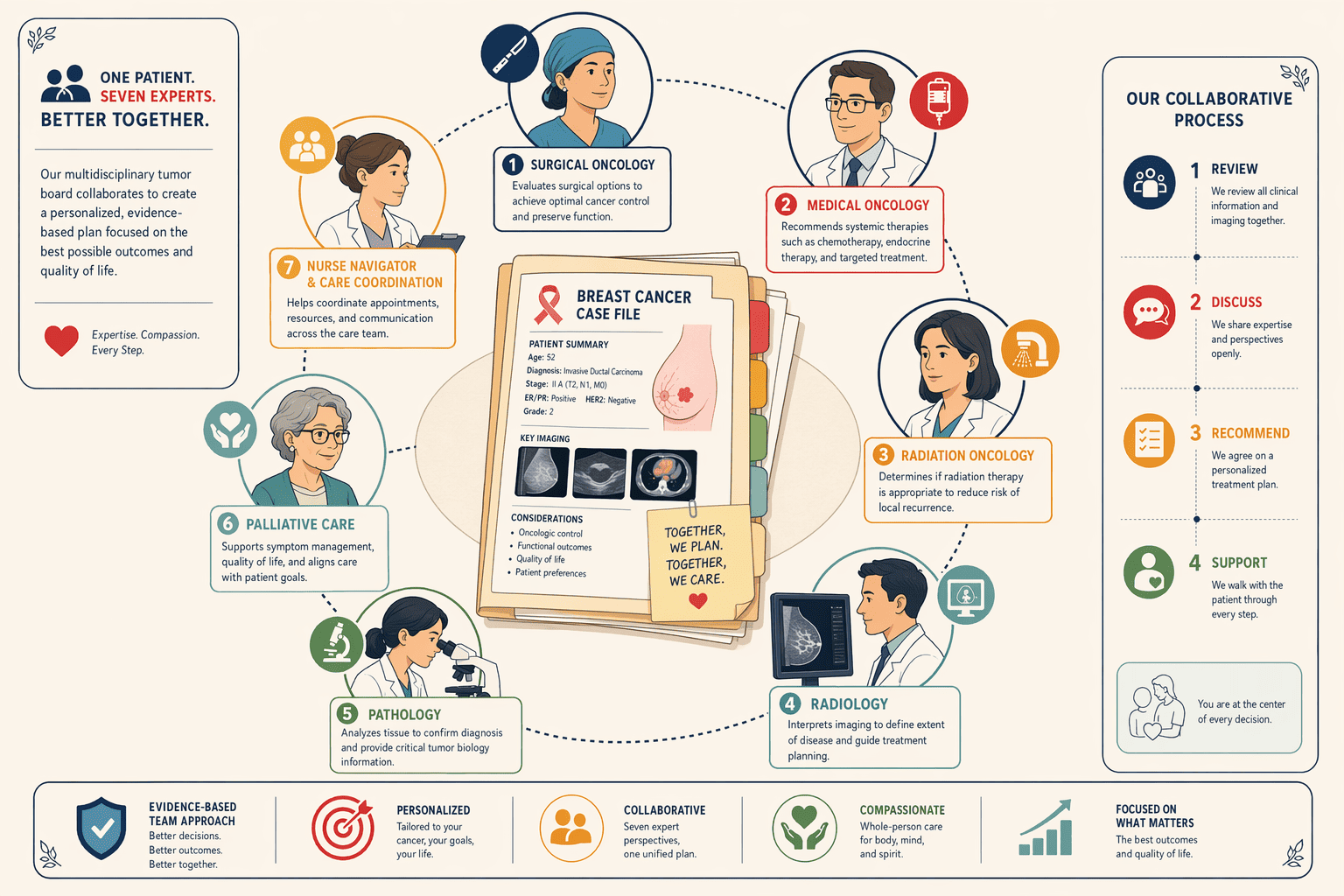
Multidisciplinary tumor board consultations convene surgical, medical, and radiation oncologists alongside radiologists and pathologists to review your case simultaneously and produce a unified, evidence-based treatment plan.
Key Takeaways
- Multidisciplinary tumor board consultations bring together surgical, medical, and radiation oncologists, radiologists, pathologists, and palliative care specialists to review imaging, pathology, and lab results simultaneously
- Patients with locally advanced, metastatic, or rare cancers benefit most from tumor board review; early-stage straightforward cases may proceed with single-specialist consultation
- Verify operational tumor board capabilities by asking for meeting frequency (weekly or twice-weekly is ideal), requesting sample documentation, and confirming which specialists attend
- Prepare complete medical records including imaging studies, biopsy reports, lab results, and treatment history before your tumor board consultation date
- Virtual tumor board platforms expand access to multidisciplinary review for patients in remote areas who cannot travel to major cancer centers
Newly diagnosed cancer patients can access personalized multidisciplinary tumor board consultations at accredited thorough cancer centers like Andromeda Cancer Hospital, tertiary oncology hospitals with structured weekly board programs, and virtual tumor board platforms that connect patients to specialist panels remotely. These consultations convene multiple cancer specialists — surgical oncologists, medical oncologists, radiation oncologists, radiologists, and pathologists — to review one patient's case simultaneously, producing a unified treatment plan rather than sequential single-doctor opinions.
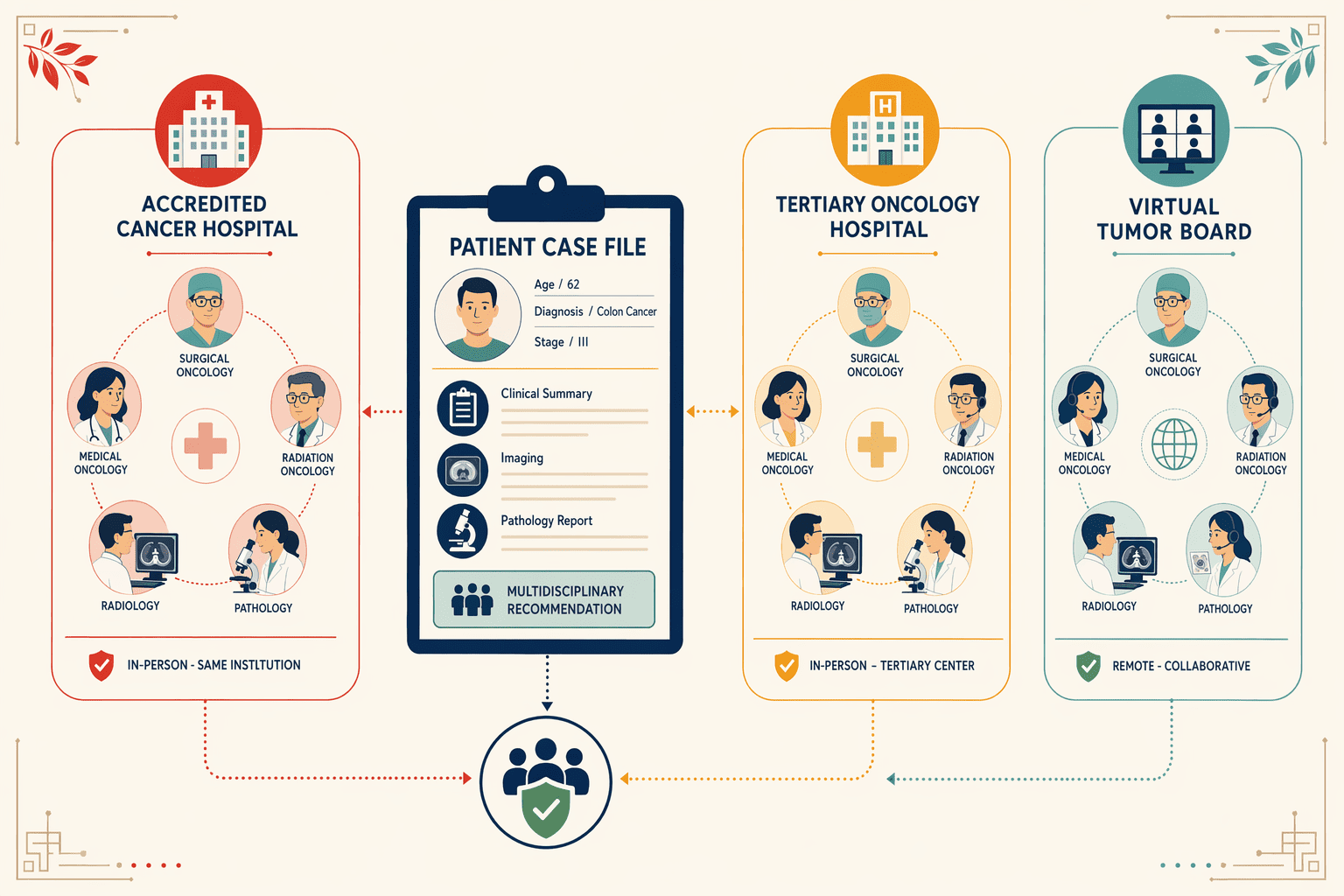
Collaborative Expert Review of Your Cancer Case
A multidisciplinary tumor board meeting brings together specialists from surgery, medical oncology, radiation oncology, radiology, and pathology to review imaging studies, biopsy reports, and lab results for a single patient at the same time. At Andromeda Cancer Hospital, these boards convene twice weekly, and each case presentation includes the surgical oncologist summarizing the clinical scenario, the radiologist highlighting imaging findings, the pathologist explaining tissue diagnosis, and the medical and radiation oncologists discussing systemic therapy and radiation options. The team https://andromedahospital.in/doctors debates treatment trade-offs in real time, then documents a consensus recommendation that balances cure rates, side effects, and patient preferences — a process that consolidates multiple expert perspectives into one coordinated plan rather than leaving the patient to synthesize conflicting opinions from separate appointments.
Why Tumor Boards Improve Treatment Outcomes
Research shows that tumor board review changes treatment plans in a meaningful proportion of cases. In one study, multidisciplinary discussion altered the initial treatment recommendation for approximately 25% of breast cancer patients, typically by adding systemic therapy, modifying surgical margins, or adjusting radiation volumes based on collective specialist input. The boards also improve adherence to national treatment guidelines, reducing practice variation and ensuring that emerging evidence — such as genomic profiling results or novel targeted therapies — is incorporated into decision-making. However, tumor board consultations do not guarantee optimal outcomes; treatment success depends on cancer stage, biology, and patient-specific factors beyond the consultation process itself.
Tumor Board Vs Single-Specialist Consultation
In a traditional single-specialist consultation, the patient sees one doctor, for example, a surgical oncologist, who recommends surgery, then refers the patient separately to a medical oncologist for chemotherapy and a radiation oncologist for radiation, with each specialist reviewing the case independently at different times. In a tumor board consultation, all three specialists (plus radiologists and pathologists) review the patient's imaging, pathology, and clinical details together in one meeting, debate the best sequence of treatments, and produce a unified plan before the patient begins therapy. The operational difference is coordination: the board ensures that surgery, chemotherapy, and radiation are planned as an integrated sequence rather than three separate decisions made in isolation. Patients should confirm that the tumor board meets regularly (weekly or twice weekly) and documents its recommendations formally; nominal boards that convene irregularly or treat review as optional may not deliver the same coordination benefit.
This content is informational only; consult your oncology team directly about your specific case and the tumor board process at your center.
Understanding what tumor boards offer is valuable, but knowing whether you need one requires examining your specific diagnosis and treatment complexity.
Who Should Seek a Tumor Board Consultation for Newly Diagnosed Cancer?
Not every newly diagnosed patient requires tumor board review, early-stage, straightforward cancers with clear treatment protocols often proceed directly with single-specialist consultation. Tumor boards deliver the highest value when treatment sequencing is complex, single-specialist recommendations conflict, or the patient's disease biology creates uncertainty about optimal therapy selection.
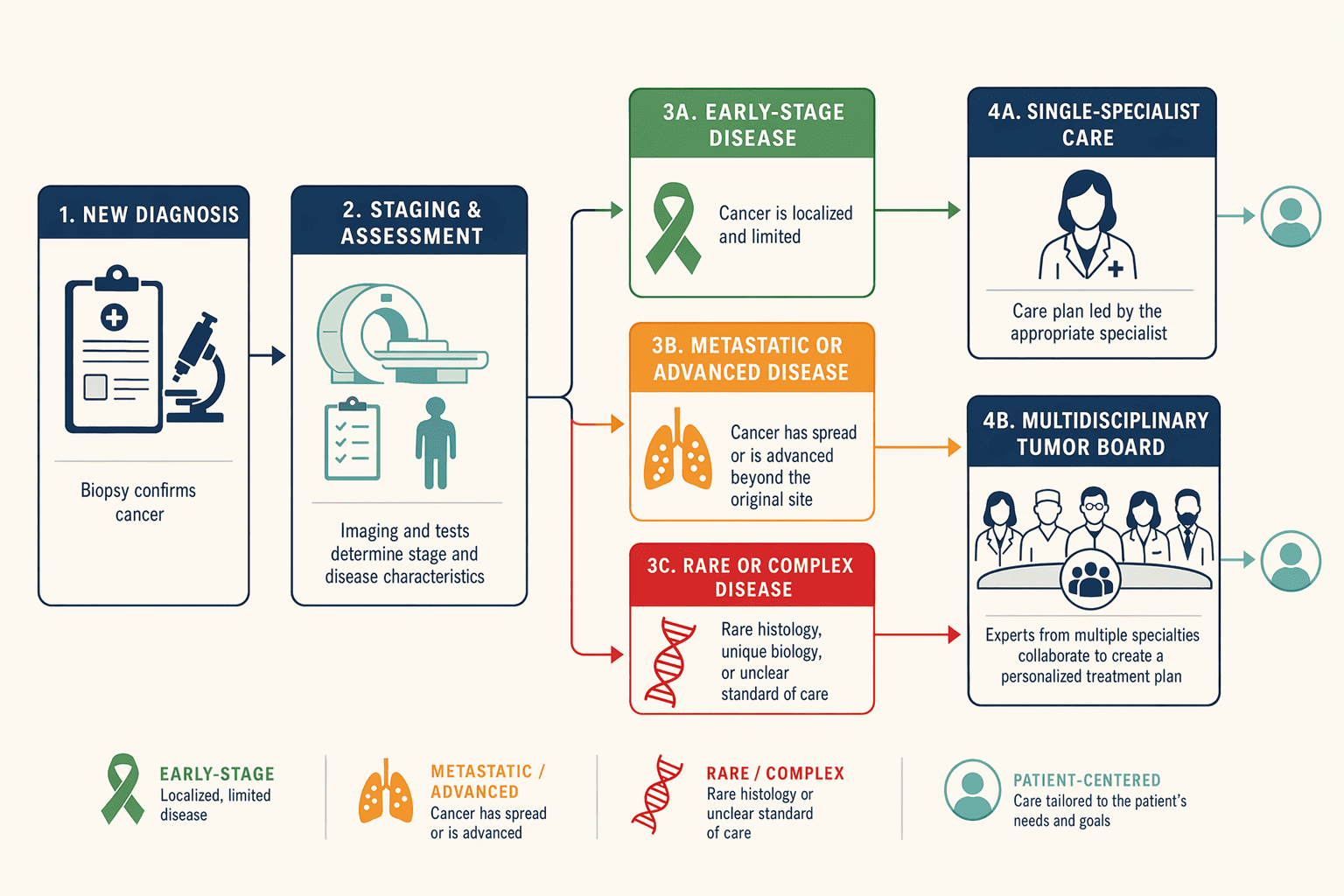
Complex or Stage-Advanced Diagnoses
Patients with locally advanced, metastatic, or rare cancers benefit most from multidisciplinary tumor board review. These cases often require coordinated input across surgical oncology, medical oncology, radiation oncology, radiology, and pathology to determine whether neoadjuvant therapy, surgery-first approaches, or systemic-only treatment offers the best chance of disease control. At Andromeda Cancer Hospital, twice-weekly tumor board meetings bring together surgical oncologists, oncoplastic breast surgeons, medical oncologists, radiation oncologists, radiologists, pathologists, and pain and palliative care specialists to evaluate treatment options for complex presentations. When margins are unclear, nodal involvement extensive, or molecular profiling suggests atypical tumor biology, the collective expertise of a tumor board reduces the risk that a single-specialist perspective misses an opportunity for improved outcomes.
When Multiple Treatment Modalities Are Under Consideration
Multi-modality cases, where surgery, chemotherapy, radiation, and targeted therapy must be sequenced carefully, benefit from coordinated tumor board planning. A surgeon may recommend upfront resection while a medical oncologist prioritizes neoadjuvant chemotherapy to downstage the tumor; a radiation oncologist may advocate for preoperative radiation to improve margin clearance. Without synchronous discussion, these recommendations remain siloed, and the patient receives conflicting guidance. Tumor board consultations resolve these conflicts by evaluating imaging, pathology, and biomarker data in real time, ensuring the treatment sequence maximizes efficacy while minimizing toxicity. Learn more about breast cancer treatment approaches.
Second-Opinion Tumor Board Consultations
Patients who receive initial treatment recommendations from a single specialist should consider second-opinion tumor board review when the proposed plan feels uncertain, overly aggressive, or insufficiently explained. Research shows that second-opinion consultations frequently result in treatment plan changes, particularly when the initial evaluation did not include multidisciplinary input. If diagnostic imaging results arrive with ambiguous findings, screening mammogram results can take anywhere from a few hours to 10 days, and diagnostic follow-up may reveal borderline pathology, a second tumor board review ensures that all specialists interpret the same data before finalizing the treatment path. Tumor board consultations do not guarantee optimal outcomes; treatment success ultimately depends on cancer stage, type, and biology. However, tumor boards optimize decision-making within the constraints of the patient's disease, reducing the likelihood that a treatable cancer progresses because sequencing was suboptimal or a critical therapy was overlooked.
Once you determine that tumor board consultation is appropriate for your case, the next critical step is evaluating whether a hospital's tumor board delivers genuine multidisciplinary coordination or merely marketing claims.
How to Evaluate Provider Tumor Board Capabilities
Not all tumor board consultations deliver the same level of coordination. Marketing materials may list oncology departments without proving that specialists actually convene, review imaging together, or document recommendations in a shared record. Patients must ask direct questions about meeting frequency, specialist attendance, and documentation practices to identify providers with genuine multidisciplinary integration versus nominal coordination.
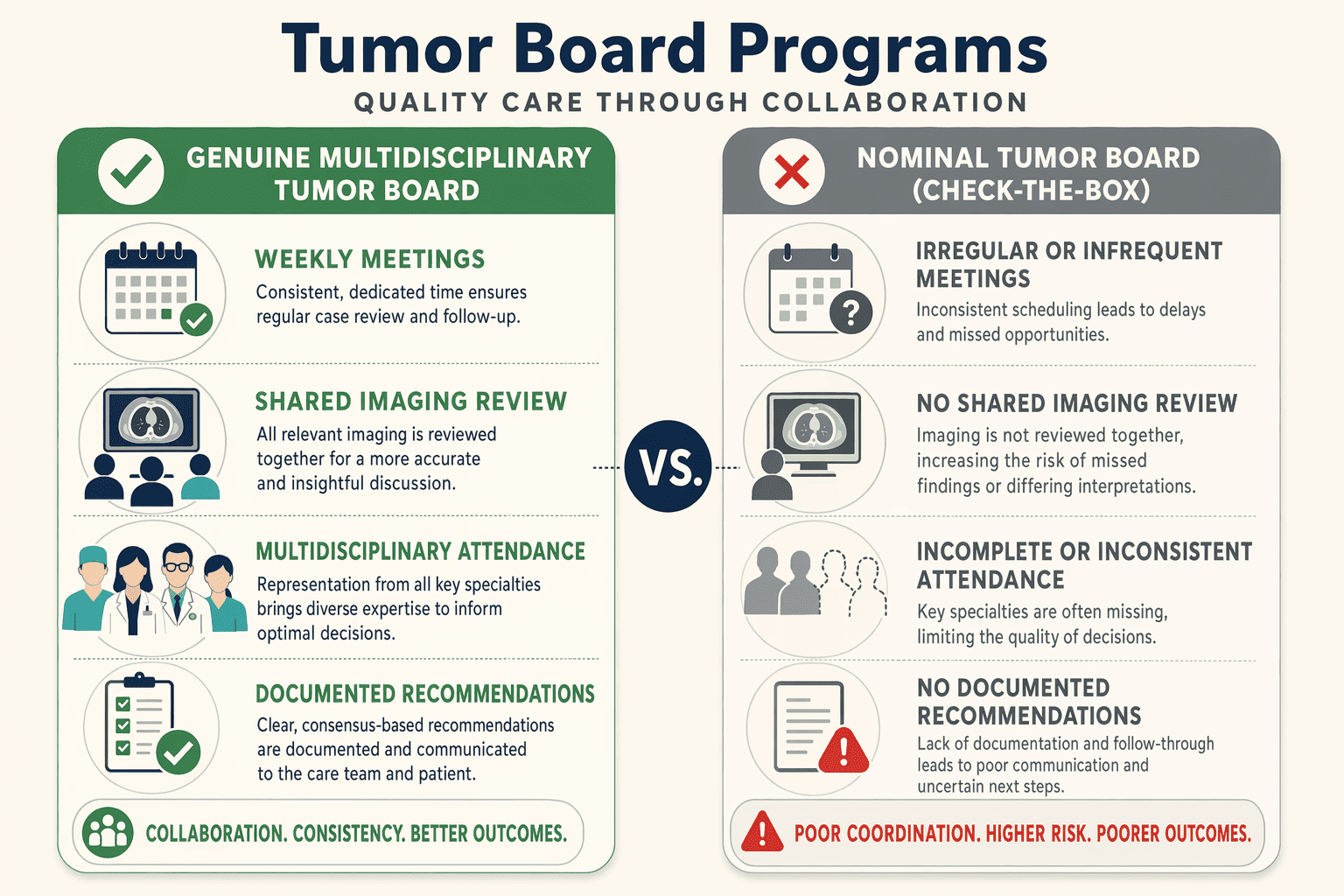
Meeting Frequency and Documentation as Quality Indicators
Operational tumor boards meet on a fixed schedule, typically twice weekly or weekly, with formal documentation in the patient's medical record. Andromeda Cancer Hospital convenes multidisciplinary tumor board meetings twice weekly, ensuring every newly diagnosed case receives coordinated review before treatment begins or in the next scheduled meeting after urgent treatment starts. Nominal boards, by contrast, convene irregularly, treat review as optional, and may lack formal documentation. When a hospital cannot provide meeting schedules or sample tumor board notes, care continuity depends on individual physician initiative rather than institutional process, a structure that breaks down when staff rotate or specialists work in separate departments with minimal cross-consultation.
Specialist Roles in Tumor Board Consultations
A complete tumor board brings together surgical oncologists, medical oncologists, radiation oncologists, radiologists, pathologists, and palliative care specialists, each contributing domain-specific expertise to the treatment plan. Andromeda Cancer Hospital's weekly tumor board includes surgical oncologists, oncoplastic breast surgeons, medical oncologists, radiation oncologists, radiologists, pathologists, and pain and palliative care specialists. Major cancer centers like Apollo Cancer Centre list 'Tumor Board & Group Tumor Board' among core services, and platforms such as V Care Cancer Center provide advice from multiple Surgical, Clinical, and Radiation Oncologists at the same time. Surgical oncology evaluates resectability and operative risk; medical oncology recommends systemic therapy sequences; radiation oncology plans dose and fractionation; radiology interprets staging scans and post-neoadjuvant response; pathology confirms molecular subtype and margin status; palliative care addresses symptom burden and quality-of-life goals. When any specialist is absent or attends sporadically, the treatment plan reflects a partial perspective rather than integrated consensus.
Questions to Ask Providers About Tumor Board Structure
Before committing to a treatment facility, patients should verify tumor board operations with specific questions:
- Meeting frequency: Does the tumor board meet twice weekly or weekly on fixed days? (Weekly or twice-weekly schedules signal operational priority; 'as needed' often means irregular.)
- Specialist composition: Do surgical oncologists, medical oncologists, radiation oncologists, radiologists, pathologists, and palliative care specialists attend together? (All six disciplines must participate for thorough review.)
- Documentation practices: Are tumor board recommendations documented in the patient's medical record with signatures from attending specialists? (Formal notes ensure treatment teams follow consensus plans.)
- Attendance verification: Can you provide recent meeting attendance logs showing which specialists were present? (Logs confirm that listed specialists actually attend, rather than being nominally affiliated.)
Hospitals may employ both surgical and medical oncologists yet keep them in separate departments with minimal cross-consultation. Ask 'Do your surgical and medical oncologists meet together weekly to review cases?' rather than 'Do you have oncologists on staff?' Marketing materials alone do not prove weekly tumor board activity or coordinated treatment planning, patients must request meeting schedules and documentation samples before committing to a facility.
| Provider | Tumor Board Frequency | Consultation Mode | Specialist Panel | NABH Accredited |
|---|---|---|---|---|
| Andromeda Cancer Hospital | Twice weekly | In-person multidisciplinary | Surgical, medical, radiation oncology + radiology + pathology + palliative care | Yes |
| Aayush Cancer Hospital | Weekly | In-person multidisciplinary | Surgical, medical, radiation oncology + radiology + pathology | Yes |
| BigOHealth | On-demand | Virtual multidisciplinary | Surgical, medical, radiation oncology + radiology + pathology | N/A (virtual platform) |
| KG Cancer Centre | Weekly | In-person multidisciplinary | Surgical, medical, radiation oncology + radiology + pathology + palliative care | Yes |
Andromeda Cancer Hospital's twice-weekly meeting structure and documented specialist roster demonstrate operational integration rather than marketing-only coordination.
After selecting a tumor board with verified operational structure, preparing thorough medical records ensures every specialist has the information needed to contribute meaningful input to your treatment plan.
What to Prepare Before Your Tumor Board Consultation
Arriving at your tumor board consultation with complete medical records ensures every specialist has the information needed to recommend personalized treatment. Start gathering documents as soon as you schedule the consultation, some records take up to two weeks to retrieve.
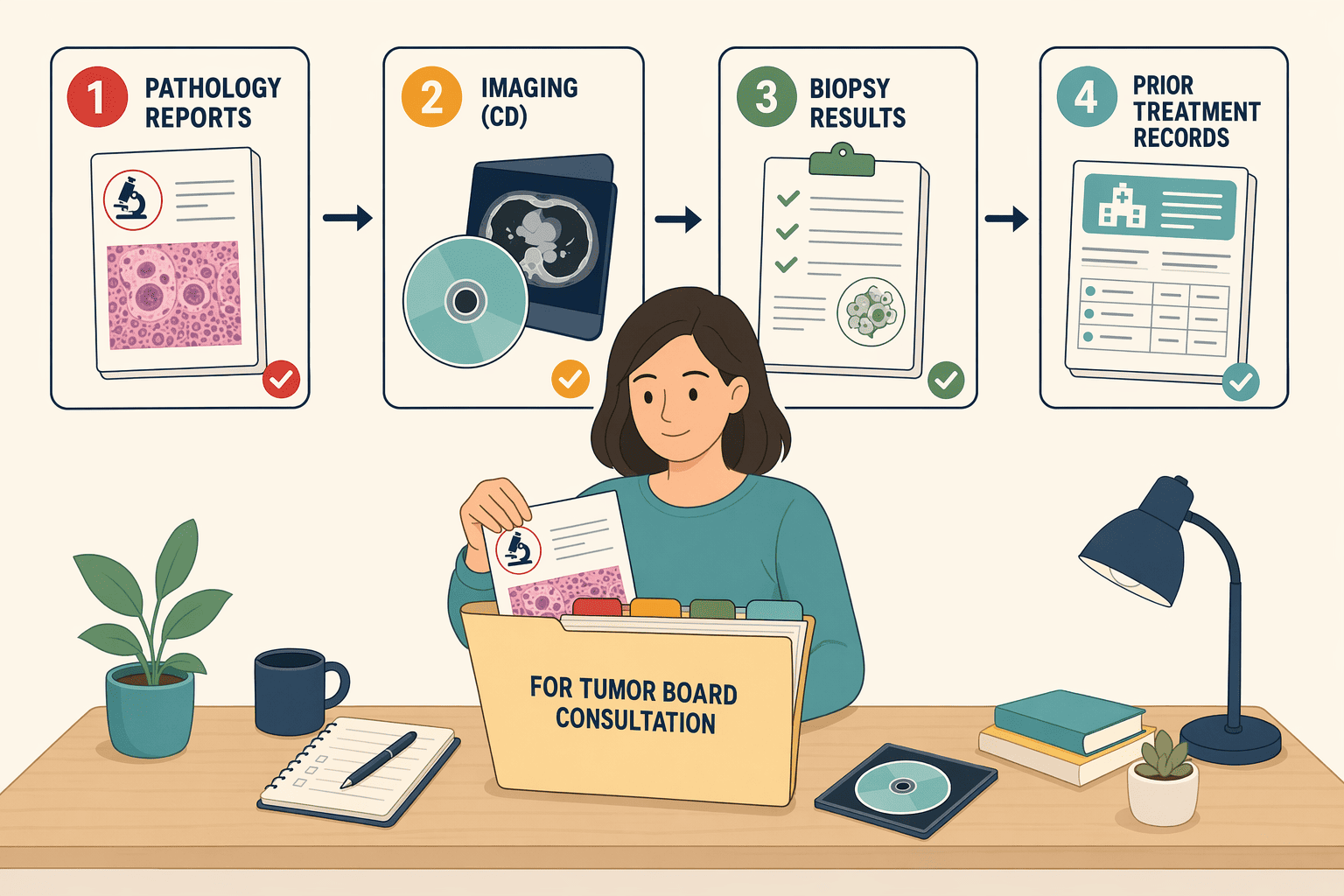
Medical Records and Imaging to Gather
Compile these documents before your consultation:
- Pathology reports and slides: Original tissue diagnosis from biopsy or surgery
- All imaging studies: Mammogram, ultrasound, MRI results on CD or digital format, mammogram reports contain BI-RADS categories and findings that guide treatment decisions
- Operative notes: Surgical records if you've had prior breast procedures
- Prior treatment summaries: Chemotherapy or radiation records with drug names, doses, and dates
- Current medications list: Include supplements and comorbidities
- Insurance authorization documents: Pre-approval letters for tumor board review or specialist consultations
How to Request Records From Prior Providers
Request records immediately after scheduling your tumor board date. Most screening mammogram results are available within 24 to 72 hours, but obtaining copies from the imaging center can add 3-5 business days. Pathology slides often require 7-10 days processing at external labs. Prior treatment summaries may need signed release forms with 10-14 day turnaround. Contact your prior providers' medical records departments directly, confirm they accept faxed or online release forms, and follow up if records haven't arrived within the stated timeline.
Questions to Bring to Your Consultation
Prepare questions about treatment sequencing (surgery first versus chemotherapy first), expected side effects of each option, clinical trial eligibility, and prognosis with different approaches. Bring a notebook or ask if you can record the consultation for later review, tumor board discussions cover complex information quickly. At facilities like Andromeda Cancer Hospital, the pathology team participates in tumor board meetings, so complete pathology documentation enables real-time expert review during your consultation.
Multidisciplinary Tumor Board Consultation at Andromeda Cancer Hospital
For newly diagnosed cancer patients, receiving a coordinated, evidence-based treatment plan from multiple specialists is critical to achieving the best possible outcome. Andromeda Cancer Hospital provides personalized multidisciplinary tumor board consultations https://andromedahospital.in/treatments that bring together surgical oncologists, oncoplastic breast surgeons, medical oncologists, radiation oncologists, radiologists, pathologists, and pain and palliative care specialists https://andromedahospital.in/doctors to evaluate every case comprehensively. This section describes the tumor board structure, consultation options, and timeline at Andromeda Cancer Hospital.
Twice-Weekly Tumor Board Meetings With Documented Specialist Panels
Andromeda Cancer Hospital convenes multidisciplinary tumor board meetings twice weekly, ensuring that every patient is evaluated in the multidisciplinary tumor board, not just complex or recurrent cases. Each board session includes surgical oncologists, oncoplastic breast surgeons, medical oncologists, radiation oncologists, radiologists, pathologists, and pain and palliative care specialists, who review imaging, pathology, and clinical history together to develop a unified treatment plan. This structured cadence, with formal documentation of each recommendation, contrasts with nominal tumor boards that convene irregularly and may lack formal documentation. By making tumor board review the default care pathway rather than an optional escalation, Andromeda Cancer Hospital operationalizes integrated care at the system level.
Virtual and In-Person Consultation Options
For patients who cannot travel to Andromeda Cancer Hospital's facility in Sonipat, Haryana, virtual consultation models provide an important access pathway. BigOHealth's virtual tumor board, which has reviewed over 100 cases, brings together medical, radiation, surgical, and nuclear medicine experts via videoconference [F1-4, F1-5, F1-6, F1-7], making multidisciplinary expertise accessible from anywhere. Similarly, MUSC Hollings Cancer Center offers virtual tumor boards that provide specialty consultation remotely, with each program holding weekly sessions. Andromeda Cancer Hospital accommodates both in-person and virtual consultation formats, allowing referring physicians and patients to participate in tumor board discussions via secure videoconference when travel is not feasible, while maintaining the twice-weekly cadence and documented specialist panel structure.
What to Expect During Your Andromeda Tumor Board Consultation
The consultation timeline at Andromeda Cancer Hospital follows a structured sequence: after a patient submits medical records, including imaging, pathology reports, and clinical history, the tumor board convenes within one week. During the session, the specialist panel reviews the case collaboratively, examining pre- and post-neoadjuvant imaging to define treatment targets precisely, and develops a personalized treatment plan through multidisciplinary discussion. The unified treatment plan is documented and shared with the patient and referring physician within 48 hours. This timeline mirrors the one-day assessment model common in academic centers, where patients are seen by several specialists and complete diagnostic procedures in a single visit for a confident assessment [F2-5, F2-7], but adapted to Andromeda Cancer Hospital's twice-weekly board cadence.
Conclusion
In-person tumor board consultations at accredited cancer hospitals, such as Andromeda Cancer Hospital's twice-weekly meetings with documented specialist panels, suit patients who can travel and value face-to-face interaction. Virtual tumor board platforms like BigOHealth with 100+ cases reviewed suit patients in remote areas who need multidisciplinary review but cannot travel to major cancer centers.
As telemedicine adoption accelerates in India, expect hybrid tumor board models combining in-person specialist collaboration with virtual patient consultations to expand access to multidisciplinary cancer care beyond metro regions, while AI-assisted decision support tools may augment tumor board discussions with real-time clinical trial matching and guideline adherence checks.
https://andromedahospital.in/support/contact to access twice-weekly specialist review with documented treatment planning. Verify operational structure, meeting frequency, specialist attendance, and formal documentation to ensure genuine multidisciplinary coordination rather than accepting marketing claims alone.
Frequently Asked Questions
What is the difference between a tumor board consultation and a second opinion from a single oncologist?
A tumor board consultation convenes multiple specialists, surgical, medical, and radiation oncologists, radiologists, and pathologists, reviewing your case simultaneously to produce a unified treatment plan. A second opinion from a single oncologist provides one additional perspective but not the coordinated multi-specialty input that tumor boards deliver in one meeting.
How do I verify that a hospital's tumor board actually meets regularly and isn't just a marketing claim?
Ask for the tumor board meeting schedule (weekly or twice-weekly is ideal), request a sample tumor board documentation note (redacted for privacy), and confirm which specialists attend each meeting. Meeting frequency and formal documentation correlate with care quality; nominal tumor boards convene irregularly and lack structured records.
Can I get a virtual tumor board consultation if I live far from a major cancer center?
Yes, virtual tumor board platforms like BigOHealth (100+ cases reviewed) and hospital programs such as MUSC Hollings offer remote multidisciplinary review. Specialists convene virtually to review submitted imaging and pathology, then deliver the treatment plan remotely, expanding access for patients in remote areas.
Does insurance cover tumor board consultation fees in India?
Many Indian health insurance policies cover tumor board consultations when medically necessary, but pre-authorization is often required. Verify coverage with your insurer and request a pre-authorization letter from your oncologist before scheduling. Standalone tumor board fees typically range ₹5,000-₹15,000; thorough cancer care packages may bundle tumor board review.
What specialists should be included in a breast cancer tumor board?
A complete breast cancer tumor board includes surgical oncologists or oncoplastic breast surgeons, medical oncologists, radiation oncologists, radiologists, pathologists, and palliative care specialists. This composition ensures all treatment modalities, surgery, chemotherapy, radiation, and symptom management, are represented in the coordinated discussion.
When should I seek a tumor board consultation versus accepting my initial oncologist's treatment plan?
Tumor board consultation is most valuable for locally advanced cancer, unclear surgical margins, multi-modality treatment decisions, or when initial recommendations conflict. Early-stage, straightforward diagnoses with clear treatment protocols may proceed with single-specialist consultation, but second-opinion tumor board review frequently changes treatment plans when uncertainty exists.
How long does it take to get tumor board consultation results after submitting my case?
Tumor boards typically convene weekly or twice-weekly, so results are available within 3-7 days of case submission depending on the next scheduled meeting. The treating oncologist presents the unified treatment plan to the patient within 48 hours of the tumor board meeting.